
TL;DR:
- Most brands undervalue TikTok’s marketing potential by applying outdated campaign strategies from other platforms.
- Leveraging TikTok’s discovery mechanics and native formats can significantly boost engagement, conversions, and revenue.
TikTok campaigns routinely outperform Meta on CPMs and engagement rates, yet a surprising number of e-commerce brands still treat the platform as a secondary channel, posting occasionally and hoping for the best. That is a costly mistake. TikTok is no longer a viral novelty. It is a fully functioning social commerce engine with native shopping tools, creator-led ad formats, and a discovery algorithm that surfaces products to purchase-ready audiences at scale. This article breaks down exactly how marketing professionals can use TikTok's unique mechanics to build genuine communities and convert attention into measurable revenue.
Table of Contents
- Why TikTok's audience is a marketing game-changer
- Core TikTok formats: Spark Ads, shopping, and livestreams
- Community-first content: How to drive engagement and build trust
- From viewers to buyers: Converting TikTok audiences efficiently
- Why most brands underutilise TikTok—and how to go beyond conventional tactics
- Create impactful TikTok campaigns with professional video expertise
- Frequently asked questions
Key Takeaways
| Point | Details |
|---|---|
| TikTok powers high engagement | Campaigns on TikTok typically achieve much higher engagement rates than other platforms and drive more authentic audience interaction. |
| Ad formats boost conversion | Spark Ads, Video Shopping Ads, and livestream commerce consistently outperform traditional digital ads for e-commerce sales. |
| Community content builds trust | User-generated content and creator partnerships are essential for sustainable community-building and lowering acquisition costs. |
| Funnel optimisation delivers results | Structured TikTok funnels—from awareness through conversion—maximise buyer action and are supported by auto-optimisation tools. |
| Balance TikTok and owned channels | For lasting brand value, marketers should complement TikTok efforts with owned platforms to maintain data control and relationships. |
Why TikTok's audience is a marketing game-changer
TikTok is not simply another social platform with a younger demographic. Its architecture is fundamentally different from Facebook, Instagram, or YouTube. Where those platforms rely heavily on social graphs and follower counts, TikTok's For You Page serves content based on interest and engagement signals. That means a brand-new account or a small creator can reach millions overnight, purely on the merit of the content. This discovery-driven model is enormously powerful for marketers who understand it.
The commercial implications are significant. When users encounter a product through TikTok's organic discovery feed, they are not in a passive scrolling mindset. They are actively engaging, saving, commenting, and clicking. This is purchase intent wrapped in entertainment, and it is genuinely difficult to replicate elsewhere. The platform's growth in digital marketing growth contexts shows why short-form video now dominates performance media planning.
TikTok's audience skews younger, particularly Gen Z and younger Millennials, but that demographic is increasingly affluent and decisive. According to platform benchmarks, engagement rates average 3.85 to 4.9%, with smaller accounts often achieving even higher rates than large brand profiles. This inverts the traditional logic of media buying, where bigger audiences always meant better reach. On TikTok, authenticity and relevance beat scale.
| Metric | TikTok | Meta (Facebook/Instagram) |
|---|---|---|
| Average engagement rate | 3.85 to 4.9% | 0.5 to 1.2% |
| Average CPM | Lower, often $6 to $10 | $10 to $20 |
| Average CVR (social commerce) | 2 to 3x website | Standard baseline |
| Small account performance | Above average | Below average |
"The brands that win on TikTok are not the ones with the biggest budgets. They are the ones who understand that discovery is the product."
The key takeaway from this data is straightforward. If you are spending significantly more per thousand impressions on Meta and receiving a fraction of the engagement, it is worth asking why TikTok is not receiving a larger portion of your paid budget. Reviewing your strategy tips for engagement across platforms can help you identify where TikTok should sit in your media mix. Similarly, understanding higher engagement formats specific to TikTok is essential before committing budget.
Key audience advantages on TikTok include:
- Discovery without followers: Content reaches users based on interest, not follower count
- Purchase-ready mindset: Users actively engage with product content rather than tolerating it
- Creator credibility: Third-party creators drive higher trust and conversion than branded accounts
- Community depth: Comment sections, duets, and stitches create genuine dialogue around products
Core TikTok formats: Spark Ads, shopping, and livestreams
Understanding TikTok's ad formats is not optional if you are serious about e-commerce performance. Each format serves a distinct role in the funnel, and using the wrong tool at the wrong time wastes budget and misses intent. The platform has three primary commercial formats worth mastering: Spark Ads, Video Shopping Ads, and TikTok Livestream commerce.

Spark Ads are arguably TikTok's most elegant advertising mechanism. Rather than creating a separate paid creative, Spark Ads amplify existing organic content, either from your own account or from a creator who has posted about your product. Because the content already has organic engagement, comments, and shares, it carries social proof that traditional paid ads cannot replicate. Spark Ads boost organic content authentically, delivering better cost per acquisition compared to standard in-feed ads. When you use them correctly, you are essentially paying to scale something that already works.
Video Shopping Ads take a more direct approach, integrating product catalogue links directly into shoppable video content. The format streamlines the path from discovery to checkout, and the results reflect that. Video Shopping Ads deliver 20 to 40% better CPA than standard video ads, largely because the purchase intent is baked into the format itself. Pair that with strong creative and you have a consistently reliable conversion tool.
TikTok Livestream commerce is perhaps the least explored but most impactful format for high-volume sales. Livestreams create urgency, authenticity, and community interaction simultaneously. Hosts can answer questions in real time, demonstrate products, and drive flash purchases through limited-time offers. TikTok Shop increases CVR 2 to 3x compared to standard website purchasing, and livestreaming amplifies this further. Learning to optimise video campaigns for this format specifically requires a different creative approach than standard short-form content.
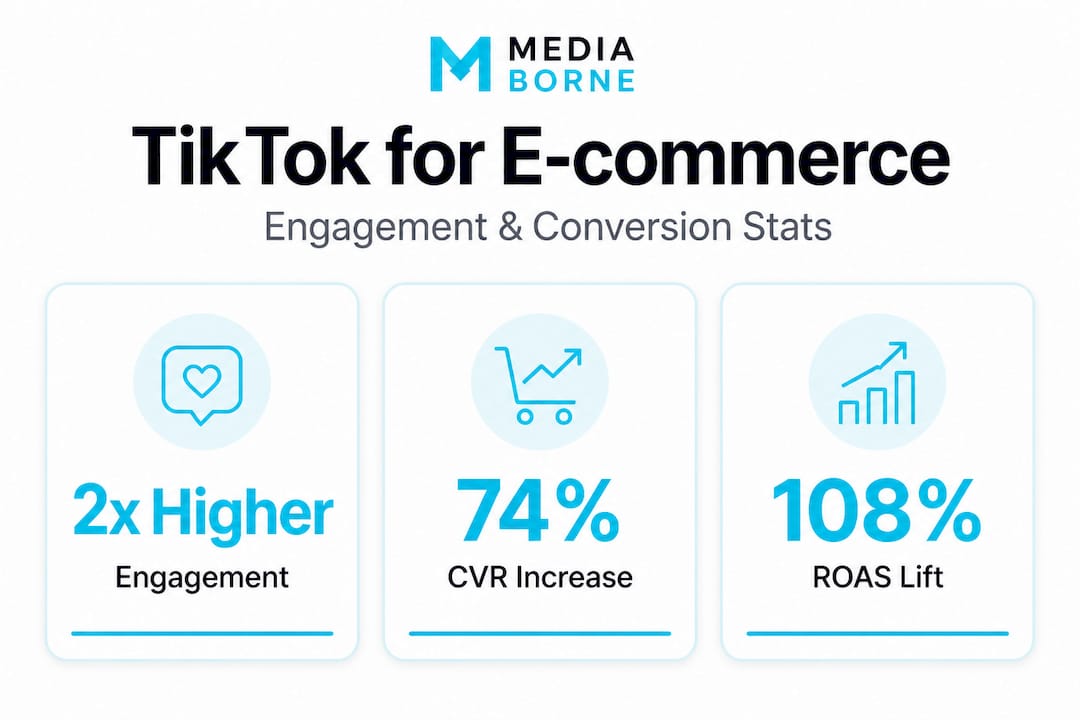
The case studies validate these numbers at scale. Hagel Shop achieved a 108% ROAS lift, Moroccanoil saw a 74% CVR increase, and Freshly Cosmetics recorded a 2159% increase in sales through TikTok formats. These are not edge cases. They are the result of deliberate format selection and creative discipline.
| Format | Primary goal | Estimated CPA improvement | Best for |
|---|---|---|---|
| Spark Ads | Awareness to consideration | 15 to 25% vs standard | UGC amplification |
| Video Shopping Ads | Consideration to purchase | 20 to 40% vs standard | Catalogue-heavy brands |
| Livestream commerce | Purchase with urgency | Highest CVR overall | Fashion, beauty, FMCG |
| In-feed standard ads | Broad awareness | Baseline | New brand introduction |
Pro Tip: Before investing in paid formats, identify which organic posts already generate strong comment engagement and product questions. Those are your Spark Ad candidates. They signal existing audience intent that paid amplification can scale quickly.
For brands building a social video strategy, the format decision should follow audience behaviour rather than brand preference. And if you are ready to explore the revenue mechanics of livestreaming in depth, understanding live streaming for sales is a logical next step.
Community-first content: How to drive engagement and build trust
Formats and budgets matter, but they cannot compensate for content that feels manufactured. TikTok audiences are exceptionally adept at detecting inauthenticity, and they will skip, scroll past, or openly criticise content that feels like a traditional advertisement dressed in TikTok clothing. The brands building lasting communities on the platform share one trait: they lead with genuine value rather than obvious sales messaging.
User-generated content is the foundation of this approach. When real customers or independent creators post honestly about a product, including the minor flaws alongside the benefits, the result is trust that paid content simply cannot manufacture. Brands that actively encourage UGC for engagement create a compounding asset. Each piece of authentic creator content extends reach, validates the brand, and feeds the algorithm with fresh signals.
"On TikTok, the most powerful media asset you can own is a community that creates content about you without being asked."
The hybrid organic-paid model is where this strategy becomes commercially precise. A 70/30 awareness split with Spark Ads scales organic content efficiently, using paid budget to amplify what already performs rather than funding content from scratch. This approach respects the platform's culture while delivering measurable return, and it is significantly more sustainable than relying purely on paid acquisition.
Here is a practical framework for building community-first campaigns that convert:
- Identify your micro-creators. Look for creators with 10,000 to 100,000 followers who already post in your product category. Their audiences are engaged and category-curious.
- Brief for authenticity, not scripts. Give creators key messages and product facts, then let them interpret the brief in their own voice. Scripted content performs poorly on TikTok.
- Engage the comment section. Reply to comments on creator posts from your brand account. This signals community and boosts the algorithm.
- Convert top organic content to Spark Ads. Once a creator post demonstrates strong organic engagement, activate it as a Spark Ad within 48 to 72 hours for maximum momentum.
- Build a community content calendar. Plan regular touchpoints, including challenges, response videos, and product education, rather than one-off campaigns.
- Measure community depth, not just reach. Track comment sentiment, saves, and shares alongside conversion metrics to understand community health.
Understanding brand engagement and ROI through a community lens changes how you report performance internally. Saves and comment threads are not vanity metrics on TikTok. They are leading indicators of purchase intent.
Pro Tip: Never let TikTok be your only audience touchpoint. Use the platform to drive awareness and consideration, but always capture email addresses or push users toward owned channels where you retain the customer relationship long-term. Planning social video workflows across channels ensures TikTok feeds your broader brand ecosystem rather than existing in isolation.
From viewers to buyers: Converting TikTok audiences efficiently
Engagement without conversion is a branding exercise, not a revenue strategy. TikTok's power lies in its ability to move audiences quickly from passive discovery to active purchase, but only if the conversion infrastructure is correctly set up. Understanding the funnel breakdown and using TikTok's native tools to optimise each stage is what separates brands achieving breakthrough results from those left wondering why their creative is not translating.
TikTok's recommended full-funnel budget allocation reflects its platform strengths. 60% of budget towards conversion, 20% towards consideration, and 20% towards awareness is the benchmark model, with GMV Max as TikTok's automated campaign tool for maximising gross merchandise value through algorithmic optimisation. This is different from Meta's approach, and brands that apply Meta's logic to TikTok invariably underperform.
| Funnel stage | Recommended budget share | Key format | Primary metric |
|---|---|---|---|
| Awareness | 20% | In-feed standard, Spark Ads | CPM, reach, video completion |
| Consideration | 20% | Spark Ads, creator content | CTR, saves, profile visits |
| Conversion | 60% | Video Shopping Ads, livestreams | CVR, ROAS, CPA |
To maximise conversions efficiently, follow this optimisation sequence:
- Set up TikTok Pixel correctly on your website or landing pages before running any paid traffic. Attribution accuracy depends on it.
- Use TikTok Shop for in-app purchases where your product category allows it. Removing the website redirect removes friction and dramatically increases impulse purchase rates.
- Activate GMV Max campaigns for catalogue-based products, particularly during high-intent periods such as seasonal sales or product launches.
- A/B test creative ruthlessly. TikTok's algorithm rewards fresh creative more aggressively than other platforms. Rotate new video concepts every 7 to 10 days to prevent fatigue.
- Monitor ROAS by format. Separate campaign structures for Spark Ads, Video Shopping Ads, and livestreams allow you to allocate budget dynamically to what is actually performing.
TikTok Shop's in-app purchase capability is particularly powerful for impulse categories including beauty, fashion, food, and lifestyle products. You can explore how comparable tactics work across platforms in our coverage of how to boost engagement and sales, and the workflow principles outlined in planning social workflows apply directly to managing a live TikTok commerce operation.
The discipline here is balancing platform-native conversion with long-term brand control. TikTok Shop is brilliant for volume, but customer data stays within TikTok's ecosystem. Building parallel owned channels, particularly email and SMS, ensures you are not entirely dependent on a single platform's algorithm.
Why most brands underutilise TikTok—and how to go beyond conventional tactics
Here is the uncomfortable reality. Most brands approach TikTok the same way they approached Instagram in 2015: with repurposed content, cautious budgets, and traditional campaign logic. They measure TikTok against Meta's benchmarks, find the metrics confusing or unfamiliar, and conclude the platform is not for them. Meanwhile, smaller, more agile brands are building loyal audiences and achieving ROAS and conversion rates that dwarf anything their traditional e-commerce tactics produce.
The problem is not TikTok. The problem is the framework being applied to it.
TikTok's CPM metrics look different from Meta's because the platform uses a different auction model and a different audience engagement mechanic. A CPM that appears slightly higher in isolation often delivers significantly more actual engagement per pound spent. Brands that judge TikTok purely through a CPM lens miss this entirely. The metric that matters on TikTok is cost per engaged user, not cost per thousand impressions.
We have seen this repeatedly in entertainment-led brand campaigns. The brands that win are those willing to experiment, to hand creative control to creators, and to measure outcomes over a 60 to 90 day window rather than expecting week-one ROAS to justify the budget. The discovery model rewards consistency and authenticity, not campaign bursts. This is a fundamentally different operating rhythm from paid search or even Meta advertising. Understanding digital marketing growth through a short-form video lens is essential for recalibrating expectations appropriately.
The brands leading on TikTok right now are treating the platform as a media channel, a community hub, and a commerce engine simultaneously. They are not waiting for certainty. They are building, testing, iterating, and scaling what works. That approach requires both creative courage and operational discipline. It also requires acknowledging that attention, once earned, is far more valuable than attention that is simply bought.
Create impactful TikTok campaigns with professional video expertise
Ready to move from strategy to execution? TikTok's potential is real, but realising it consistently requires more than a smartphone and a posting schedule. The brands achieving the results outlined in this article invest in production quality, creative strategy, and the kind of entertainment-led content that earns genuine attention rather than fleeting views.
Media Borne's video production services are built specifically for brands that want to compete at this level, combining high-quality creative production with deep platform knowledge to deliver TikTok content that performs commercially. For brands exploring immersive and interactive formats, our virtual immersive services open up new possibilities for audience engagement. If you are ready to commit to TikTok as a long-term growth channel, explore how to invest in video growth with Media Borne as your production and strategy partner.
Frequently asked questions
What makes TikTok Shop conversion rates higher than website shopping?
TikTok Shop's seamless in-app purchase flow converts browsing shoppers at 2 to 3 times the rate of typical e-commerce websites, helping brands capitalise on impulse intent without redirecting users away from the platform.
How do Spark Ads improve TikTok campaign performance?
Spark Ads authentically boost popular organic posts, scaling reach and conversion with higher engagement and lower CPA, because the social proof already built into the organic content carries over to the paid amplification.
Which TikTok ad formats should e-commerce brands prioritise for sales?
For conversion, Video Shopping Ads and creator-driven livestreams consistently deliver the highest sales performance, with case studies showing over 100% ROAS increases for brands using these formats correctly.
How can brands retain TikTok audience data for long-term value?
While TikTok drives strong impulse purchasing, marketers should balance platform activity with owned channels, particularly email and SMS, to retain customer data and nurture long-term brand relationships beyond the platform's ecosystem.
Recommended
- Social media strategy tips to boost engagement in 2026
- Top video marketing tips to boost engagement by 80%
- Drive digital marketing growth with short-form video
- Boost e-commerce sales with live commerce strategies
- TikTok Ads for Etsy Sellers: A Smarter Tracking and Testing Guide
- Nectar Blog | Shoppable media: driving e-commerce sales growth in 2026