

Marketing professionals constantly struggle with social video production that feels slow, disjointed, and disconnected from platform realities. Traditional workflows designed for long-form content simply do not translate to the fast-paced demands of TikTok, Instagram Reels, or YouTube Shorts. The result? Missed opportunities, lower engagement, and content that fails to convert. This guide walks you through a modern, social-first approach to planning video workflows that prioritise speed, testing velocity, and platform-specific formats. You will learn how to structure teams, select tools, execute efficient production cycles, and optimise content based on real performance data.
Table of Contents
- Key Takeaways
- Understanding social-first video workflows
- Preparing your social video workflow: tools, teams, and content design
- Step-by-step execution of social video workflow
- Monitoring, optimising, and scaling your social video content
- Explore professional video production services
- How to plan social video workflows: frequently asked questions
Key Takeaways
| Point | Details |
|---|---|
| Platform first design | Content is built around platform specifications and audience expectations to speed turnaround and reduce rework. |
| Vertical formats and hooks | Create vertical first videos with multiple hook variations to accelerate testing and identify what resonates. |
| UGC style content | UGC style content lowers production costs and boosts perceived authenticity. |
| Rapid iterative cycles | Film multiple variations in one session and publish quickly to inform the next batch of content. |
| Data driven optimisation | Monitor performance and use data to optimise future content and distribution decisions. |
Understanding social-first video workflows
Social-first workflows represent a fundamental shift in how brands approach video content. Instead of creating polished, long-form videos and then cutting them down for social platforms, you start with the platform specifications and audience expectations. Modern social video workflows prioritise social-first production over traditional methods, beginning with vertical formats, multiple hook variations, and user-generated content styles that accelerate testing velocity.
Platform specifications drive every creative decision. TikTok demands 9:16 vertical video with hooks in the first three seconds. Instagram Reels prioritise trending audio and visual effects. YouTube Shorts require different pacing than traditional YouTube content. When you design content around these requirements from the outset, you eliminate the costly rework that comes from trying to retrofit traditional video for social feeds.
Vertical formats are not just a technical requirement but a creative opportunity. Mobile users hold their phones vertically, and content that fills the screen naturally commands more attention. Multiple hook variations allow you to test different opening seconds to identify which messaging resonates most with your target audience. Rather than committing to a single creative direction, you produce three to five different hooks for the same core content.
User-generated content aesthetics have transformed production expectations:
- Raw, authentic footage often outperforms polished studio content
- Lower production costs enable higher volume testing
- Audiences perceive UGC-style content as more trustworthy
- Faster turnaround times support real-time marketing opportunities
"The best social video content feels native to the platform, not like an advertisement that wandered into the feed. Authenticity drives engagement, and speed enables iteration."
This approach requires rethinking traditional production hierarchies. Instead of lengthy pre-production planning followed by intensive shoot days and post-production, social-first workflows embrace rapid cycles of creation, testing, and refinement. You might film ten variations in a single afternoon, publish them across platforms, and use performance data to inform the next batch of content. Social media video production services increasingly focus on this iterative model rather than one-off campaign deliverables.
Preparing your social video workflow: tools, teams, and content design
Successful social video workflows depend on having the right infrastructure before you start filming. This includes software for editing and project management, hardware for capture and lighting, and team members with clearly defined roles. Without proper preparation, even the best creative ideas bog down in production bottlenecks.
Essential tools fall into several categories:
| Tool category | Examples | Primary use |
|---|---|---|
| Editing software | CapCut, Adobe Premiere Rush, Final Cut Pro | Quick cuts, effects, captions |
| Project management | Notion, Asana, Monday.com | Content calendars, approval workflows |
| Asset storage | Google Drive, Dropbox, Frame.io | Centralised file management |
| Analytics platforms | Sprout Social, Hootsuite, native platform insights | Performance tracking |
Your smartphone is often your most important production tool. Modern phones shoot 4K video, and their vertical orientation naturally suits social formats. Invest in a simple tripod, ring light, and lapel microphone rather than expensive studio equipment. The goal is removing friction from content creation, not building a broadcast facility.
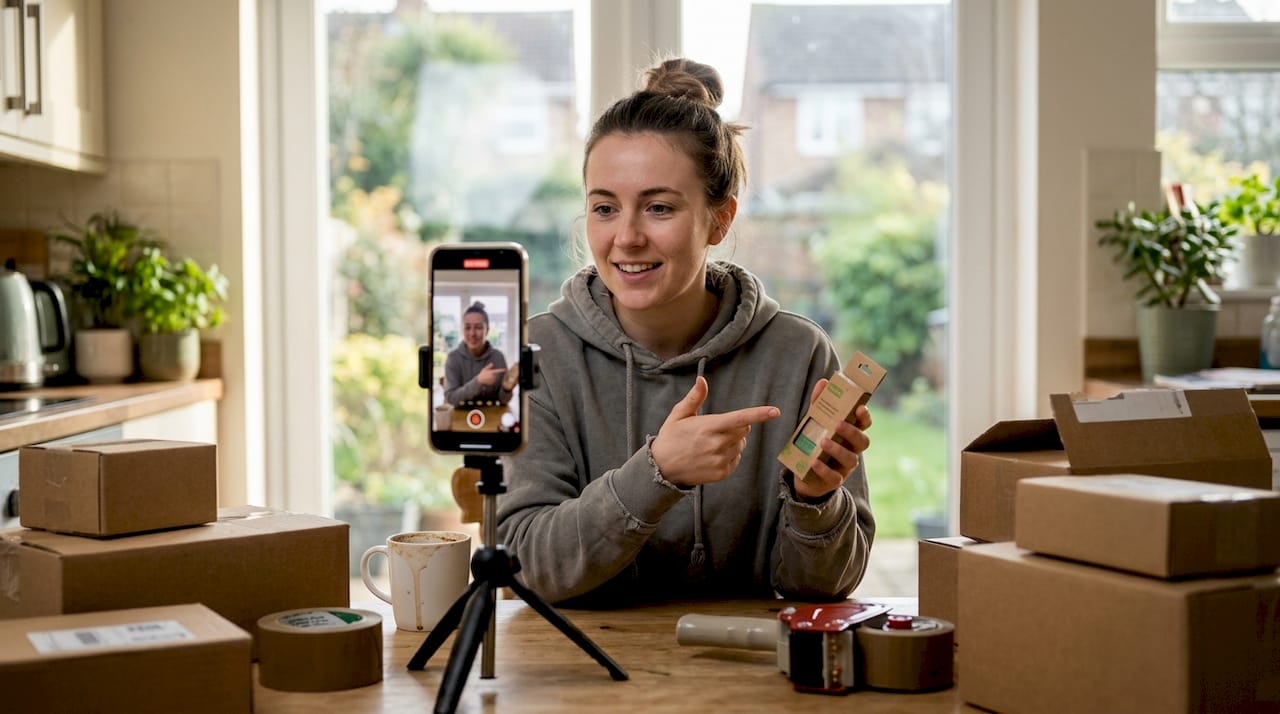
Team structures for social video differ from traditional production crews. You need content creators who understand platform culture, editors who can work quickly with minimal direction, and marketers who interpret performance data to guide creative decisions. In smaller teams, individuals wear multiple hats, but clear role definition prevents confusion about who owns each workflow stage.
Content design planning starts with platform specifications and brand voice alignment. Create templates for common content types: product demonstrations, behind-the-scenes footage, customer testimonials, educational content. Templates provide structure while allowing creative flexibility. They also speed up production by establishing consistent visual language and pacing.
Modern social video workflows outperform traditional approaches by enabling faster iteration and higher performance in short-form feeds. This speed advantage compounds over time as you accumulate performance data and refine your understanding of what resonates with your audience.
Pro Tip: Build feedback loops into your workflow from day one. Schedule weekly reviews where team members watch top-performing content from competitors and platforms, discussing what techniques you might adapt. This continuous learning process keeps your content fresh and prevents creative stagnation.
Video production services increasingly offer consulting on workflow optimisation alongside traditional production deliverables, recognising that process improvements often deliver more value than individual pieces of content.
Step-by-step execution of social video workflow
Efficient execution requires a structured process that moves content from concept to publication quickly whilst maintaining quality standards. The following workflow represents best practices for social-first video production:
-
Ideation and brief creation: Start with clear objectives for each piece of content. What action should viewers take? What emotion should they feel? Document these goals in a simple brief that includes platform, format, key message, and success metrics.
-
Scripting and storyboarding: Write loose scripts that outline key talking points rather than word-for-word dialogue. Natural delivery outperforms scripted reading in social contexts. Sketch simple storyboards showing hook, body, and call-to-action structure.
-
Batch filming: Record multiple videos in single sessions to maximise efficiency. Film three to five hook variations for each concept, allowing you to test different openings against the same core content. Keep lighting and background consistent to maintain visual coherence.
-
Rapid editing: Edit for platform specifications immediately after filming whilst creative decisions are fresh. Add captions, on-screen text, and effects that enhance rather than distract. Most edits should take 30 to 60 minutes per video.
-
Review and approval: Implement streamlined approval processes that prevent bottlenecks. Use collaborative tools where stakeholders can leave timestamped comments directly on video files rather than lengthy email chains.
-
Distribution and scheduling: Publish content at optimal times based on when your audience is most active. Use scheduling tools to maintain consistent posting frequency without requiring manual uploads.
-
Performance monitoring: Track engagement metrics within the first 24 hours to identify early winners. Double down on high-performing content by boosting it with paid promotion or creating follow-up videos on similar themes.
| Workflow aspect | Traditional approach | Social-first approach |
|---|---|---|
| Planning timeline | Weeks of pre-production | Days or hours |
| Production style | Polished, scripted | Authentic, flexible |
| Testing strategy | Single version per concept | Multiple hook variations |
| Editing timeline | Days to weeks | Hours |
| Success metrics | Views and completion | Engagement and conversions |
Using multiple hook variations and user-generated content styles accelerates testing velocity and content performance. This approach transforms video production from a slow, expensive process into a rapid experimentation engine.
Pro Tip: Batch film content around recurring themes or formats to maximise efficiency. If you are creating product demonstration videos, film demonstrations for five products in one session rather than spreading them across multiple days. This approach reduces setup time and maintains visual consistency.
Advertising campaign video production increasingly incorporates these rapid-iteration principles, even for paid media campaigns where testing multiple creative variations drives better return on ad spend.
Monitoring, optimising, and scaling your social video content
Production is only half the equation. Systematic performance monitoring and optimisation separate successful social video strategies from those that plateau after initial momentum. You need clear metrics, regular review cycles, and willingness to kill underperforming content whilst scaling winners.
Key metrics to track include:
- Engagement rate: Likes, comments, shares relative to reach
- Watch time: How long viewers stay engaged before scrolling
- Click-through rate: Percentage clicking links in captions or profiles
- Conversion rate: Actions taken after viewing content
- Cost per result: For paid promotion, cost to achieve desired action
Platform analytics provide these metrics natively, but aggregating data across platforms requires dedicated tools. Sprout Social, Hootsuite, and similar platforms centralise reporting so you can compare performance without jumping between multiple dashboards. Export data weekly to track trends over time and identify patterns in what content performs best.
Social-first workflows enable faster iteration and higher performance in short-form feeds through constant testing. This iterative approach means you are always learning, always improving, and never locked into strategies that no longer work.
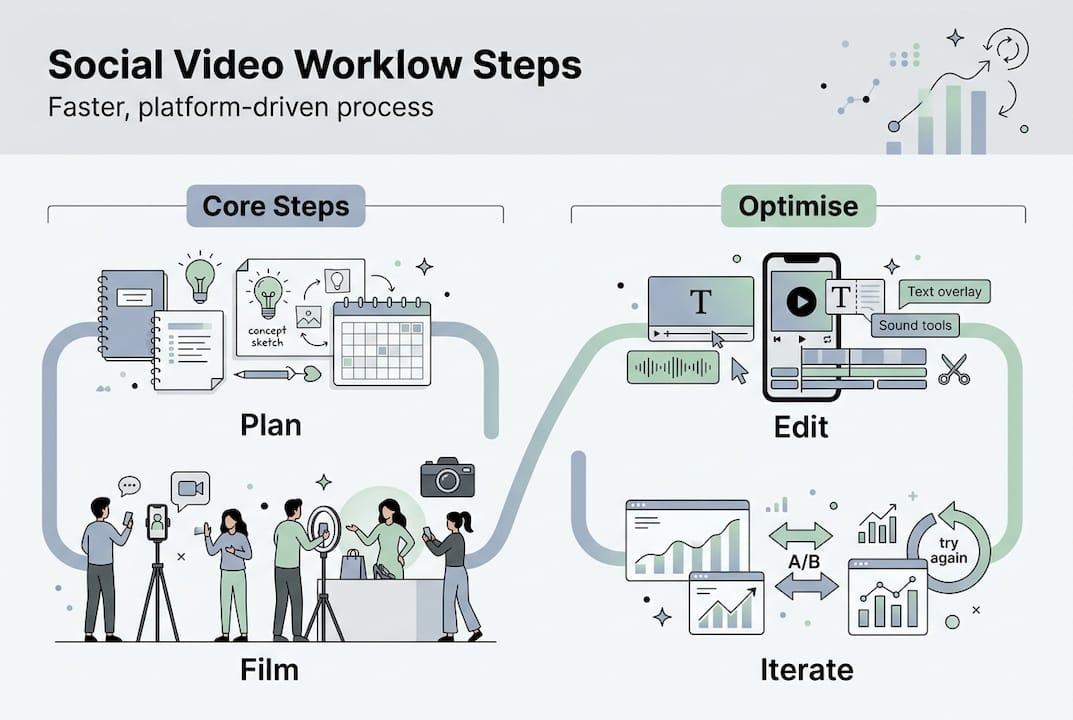
Iterative testing follows a simple cycle: create, publish, measure, learn, repeat. When a video performs well, analyse why. Was it the hook? The topic? The visual style? Create variations that test individual elements to understand what drives results. When content underperforms, do not simply abandon the concept. Test different hooks, different calls-to-action, or different posting times before concluding the idea does not work.
Content refresh strategies keep your library relevant without constant new production. Successful videos from six months ago can be updated with new hooks or slight variations and republished. Evergreen content about your products or services deserves regular rotation in your posting schedule.
Scaling successful formats means identifying your highest-performing content types and producing more of them. If behind-the-scenes content consistently outperforms product demonstrations, shift your production balance accordingly. This does not mean abandoning variety, but it does mean doubling down on what works whilst you experiment with new approaches.
Common pitfalls to avoid:
- Changing too many variables at once, making it impossible to identify what drove results
- Focusing on vanity metrics like views instead of business outcomes
- Abandoning content types too quickly before gathering sufficient performance data
- Neglecting to document learnings so institutional knowledge walks out the door with team members
Social media video optimisation is an ongoing process, not a one-time fix. Markets shift, platforms change their algorithms, and audience preferences evolve. Your workflow must be flexible enough to adapt whilst maintaining the core principles of speed, testing, and data-driven decision making.
Explore professional video production services
Building internal workflows takes time, expertise, and resources that many marketing teams lack. Media Borne specialises in entertainment-led video production that combines the speed of social-first workflows with the polish of professional production. Rather than choosing between quality and velocity, you get both through streamlined processes honed across hundreds of campaigns.
Our approach starts with understanding your brand voice, audience expectations, and business objectives. We then design bespoke production workflows that deliver consistent content at the volume and pace social platforms demand. From initial concept development through filming, editing, and performance analysis, we handle the entire production cycle whilst keeping you involved in key creative decisions. Professional video production services should accelerate your marketing goals, not create new bottlenecks.
Whether you need ongoing content for social selling campaigns or one-off projects that require specialised expertise, partnering with experienced producers eliminates the trial-and-error phase of building workflows from scratch. You benefit from established relationships with platform partners, proven templates that drive engagement, and creative teams who understand how to balance brand guidelines with platform-native content styles.
Pro Tip: Even if you handle most production in-house, partnering with professionals for quarterly strategy reviews and workflow audits ensures you are not missing opportunities or repeating avoidable mistakes. Fresh perspectives often identify improvements that internal teams overlook through familiarity.
Explore video production and content creation solutions designed specifically for e-commerce and entertainment brands navigating the complex landscape of social video marketing.
How to plan social video workflows: frequently asked questions
How long does a typical social video workflow take?
From initial brief to published content, efficient social video workflows take between one and three days depending on complexity. Simple user-generated style content can move from concept to publication in hours, whilst more polished productions require additional time for scripting, filming, and editing. Batch production significantly reduces per-video timelines by handling multiple pieces of content in single sessions.
What is the best way to test multiple video hooks?
Film three to five different opening sequences for the same core content, keeping everything after the first five seconds identical. Publish all variations simultaneously or stagger them across days, then compare engagement metrics to identify which hook drives the highest watch time and interaction rates. The winning hook informs future content whilst underperformers provide learning opportunities.
How do you choose the right platform specifications?
Start by identifying where your target audience spends time and what content formats perform best on those platforms. TikTok favours fast-paced, vertical video with trending audio. LinkedIn responds to educational, professional content. Instagram Reels blend entertainment and aspiration. Research top-performing content in your niche on each platform to understand current specifications and creative trends.
Can user-generated content styles really speed up production?
Absolutely. User-generated aesthetics eliminate lengthy pre-production planning, expensive equipment requirements, and time-consuming post-production polish. Audiences increasingly prefer authentic, relatable content over obviously produced advertisements. This shift in expectations means you can create effective social media video content faster and cheaper than ever before whilst maintaining or improving engagement rates.
What tools help streamline social video project management?
Notion and Asana excel at content calendar management and team collaboration. Frame.io provides video-specific features like timestamped comments and version control. Native platform scheduling tools like Meta Business Suite and TikTok Creative Centre handle distribution. The best tool stack depends on your team size, technical comfort, and specific workflow pain points. Start simple and add complexity only when clear needs emerge.