

TL;DR:
- Authentic brand partnerships are based on shared values, audience overlap, and genuine exchange.
- Branded entertainment uses storytelling and high-quality production to deepen audience engagement.
- Long-term creator relationships build trust and authenticity, leading to better partnership outcomes.
Brand partnerships have long been misunderstood as simple logo swaps or co-branded promotions. The reality is far more interesting. Authentic partnerships are built on shared values, genuine audience overlap, and a fair exchange that creates loyalty well beyond standard metrics. This guide breaks down exactly how brand managers and marketing strategists can move beyond transactional thinking, build entertainment-led collaborations, and turn shared audiences into genuinely engaged communities that convert.
Table of Contents
- Understanding what makes a brand partnership successful
- Integrating branded content and entertainment for deeper audience connection
- Evolving partnership strategies: always-on creators and platform synergy
- Measuring partnership impact: engagement, recall, and growth
- What most partnership guides miss: the power of creative chemistry
- Explore partnership and media production opportunities with Media Borne
- Frequently asked questions
Key Takeaways
| Point | Details |
|---|---|
| Authenticity drives loyalty | Partnerships rooted in shared values and real audience overlap build lasting engagement far beyond simple metrics. |
| Storytelling over promotion | Branded entertainment succeeds by weaving brands seamlessly into compelling narratives, elevating recall. |
| Always-on creator approach | Fewer, deeper deals with trusted creators on multiple platforms outperform scattered, one-off campaigns. |
| Measure what matters | Focus on engagement and audience recall, not superficial metrics, to assess partnership effectiveness. |
| Creative chemistry unlocks results | The most impactful collaborations come from flexible, innovative partnerships that spark creative energy. |
Understanding what makes a brand partnership successful
Not all partnerships are created equal. The difference between a collaboration that drives real commercial outcomes and one that quietly fades from memory often comes down to a single question: do these two brands actually belong together in the minds of their audiences?
Audience alignment is the starting point. When two brands share a meaningful overlap in who they serve, the partnership feels natural rather than forced. NASCAR offers a compelling example of this in action. By deliberately seeking out brand partners whose customer profiles mirrored the motorsport's passionate, loyalty-driven fanbase, NASCAR achieved rapid commercial traction without diluting its identity. The lesson here is not simply about demographics. It is about shared emotional territory.
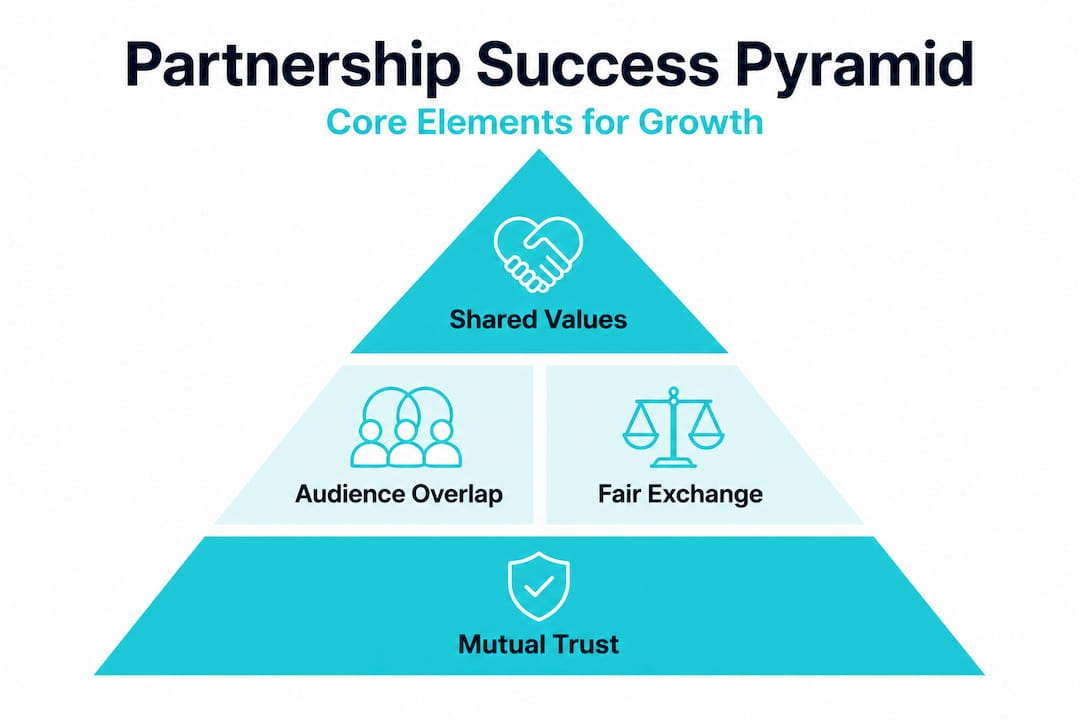
Successful partnerships require alignment on customer base, audience overlap, shared values, and mutual fair exchange, with authenticity driving loyalty beyond standard metrics. That last point matters enormously. Authenticity is not a marketing buzzword. It is the mechanism by which audiences decide whether to trust a collaboration or dismiss it.
Consider the contrast between transactional and authentic partnerships:
| Factor | Transactional partnership | Authentic partnership |
|---|---|---|
| Primary driver | Short-term revenue | Shared values and audience fit |
| Audience perception | Forced or commercial | Natural and credible |
| Content output | Promotional and interruptive | Engaging and entertainment-led |
| Long-term outcome | Minimal loyalty uplift | Sustained community growth |
| Creative flexibility | Rigid and scripted | Collaborative and adaptive |
"The most powerful brand partnerships are not the ones with the biggest budgets. They are the ones where audiences cannot imagine the two brands apart."
The brands that win at partnerships are those investing in driving engagement via branded content rather than relying on reach alone. Reach without engagement is noise. Engagement without authenticity is short-lived. The combination of genuine alignment and compelling content is what creates lasting commercial value.
Key characteristics of successful authentic partnerships include:
- Shared audience values, not just overlapping demographics
- Complementary brand personalities that enhance each other without competing
- A clear creative vision that both parties genuinely believe in
- Mutual investment in the relationship, not just the deliverable
- Flexibility to evolve the collaboration as the audience responds
Pro Tip: Before signing any partnership agreement, map the emotional territory each brand occupies in its audience's life. If there is no genuine overlap in how people feel about both brands, no amount of strategic alignment will manufacture authenticity.
Exploring brand-led engagement strategies in depth reveals that the brands growing fastest are not those with the most partnerships. They are the ones with the most intentional ones.
Integrating branded content and entertainment for deeper audience connection
With the foundation of authentic connections in place, let us move into the creative heart of partnerships. Branded content and entertainment are where strategy becomes experience, and where audiences move from passive observers to active participants.

Branded entertainment prioritises storytelling and organic brand integration over promotion, using high-quality production standards for engagement and recall. This is a fundamentally different mindset from traditional advertising. Instead of interrupting an audience's experience, branded entertainment becomes the experience itself.
Cannes Lions award-winning campaigns consistently demonstrate three shared frameworks that separate memorable branded entertainment from forgettable content:
| Framework element | What it means in practice | Why it matters |
|---|---|---|
| Production quality | Cinema-grade visuals, sound design, and pacing | Sets credibility and signals brand investment |
| Content dimension | Multi-layered narratives with emotional depth | Creates recall and word-of-mouth sharing |
| Audience fit | Content built around what the audience already loves | Reduces resistance and increases organic reach |
The branded entertainment journey is not linear. Audiences do not move neatly from awareness to purchase. They orbit content, returning to it repeatedly when it resonates. This is why production quality is not a luxury. It is a strategic requirement.
Here is a practical numbered approach for integrating your brand into entertainment content effectively:
- Define the emotional story first. Before any brand messaging is considered, identify what emotional experience you want the audience to have. The brand's role should serve that story, not override it.
- Choose the right format for the platform. A long-form documentary series works differently on YouTube than a serialised short-form narrative on TikTok. Match the content dimension to where your audience already spends time.
- Integrate organically, not obviously. The brand should feel like a natural part of the world being depicted. Heavy-handed product placement breaks the narrative spell and triggers scepticism.
- Invest in production quality proportionally. Even modest budgets can achieve high perceived quality with the right creative direction. Audiences forgive limited budgets far less readily than they forgive poor storytelling.
- Build in audience participation. The most effective branded entertainment invites the audience to respond, share, or contribute. This turns passive viewers into active advocates.
Strong brand storytelling techniques are what separate campaigns that generate genuine recall from those that generate only impressions. Recall is the metric that actually predicts purchase behaviour. Impressions tell you how many people saw something. Recall tells you how many people were changed by it.
"Entertainment earns attention. Advertising buys it. The brands winning in 2026 are the ones who understand the difference."
Mastering video storytelling for brands is particularly critical given that video remains the dominant format for both engagement and recall across every major platform. The production choices you make, from pacing to music to visual language, communicate as much about your brand as the words being spoken.
Evolving partnership strategies: always-on creators and platform synergy
As integration becomes more sophisticated, the strategy behind managing creator relationships is evolving. Most marketers still think in campaign cycles. The brands seeing the greatest return are thinking in relationships.
Consumers follow creators across 6 to 7 platforms each month. This is a critical insight. Your creator partner is not a channel. They are a community leader whose audience trusts them across multiple contexts and platforms simultaneously. A one-off sponsored post captures a moment. An always-on partnership captures a relationship.
The shift from intermittent to always-on creator partnerships produces measurably better outcomes because trust compounds over time. When an audience sees a creator authentically integrating a brand across months of content, the brand becomes part of that creator's world. Scepticism fades. Familiarity builds. Purchase intent rises.
Fewer creators with deeper deals consistently outperform broad networks of one-off collaborations. The reason is straightforward. A creator who genuinely uses and believes in a product will communicate that authenticity in ways no brief can manufacture. Audiences are exceptionally good at detecting the difference.
Here is how to build deeper, always-on creator relationships that actually deliver:
- Start with genuine product fit. Before approaching any creator, ensure the product or service is something they would plausibly use in their real life. Forced fit is immediately visible to their audience.
- Co-create the content brief. Give creators meaningful input into how the brand is represented. Their audience knowledge is your most valuable creative resource.
- Commit to longer contract terms. A minimum of three to six months allows the relationship to develop naturally and gives the audience time to absorb and trust the association.
- Reduce approval friction. Lengthy approval processes kill creative spontaneity and signal distrust. Establish clear brand guidelines upfront, then step back and let the creator work.
- Review performance collaboratively. Share data with your creator partners and discuss what is resonating. This builds investment on both sides and improves future content.
- Allow platform flexibility. Since audiences follow creators across multiple platforms, give creators the freedom to integrate your brand where it fits most naturally for each platform's context.
Pro Tip: The single biggest mistake brands make with creator partnerships is treating the creator as a media placement rather than a creative collaborator. The moment a creator feels like a vendor rather than a partner, the content loses the authenticity that made them valuable in the first place.
Understanding boosting marketing ROI through creator partnerships requires accepting that the most valuable outcomes are not always the most immediately measurable ones. Community trust, brand affinity, and word-of-mouth recommendation build slowly and pay back exponentially.
Staying current with media production trends is equally important because the platforms and formats that audiences favour shift constantly. An always-on strategy must be flexible enough to evolve with those shifts without losing the continuity that makes the partnership valuable.
Measuring partnership impact: engagement, recall, and growth
Understanding how effective these strategies are means tracking the right signals. Most partnership measurement still defaults to impressions and follower counts. These numbers are easy to report but poor predictors of actual business outcomes.
The metrics that genuinely matter are engagement, recall, and growth. Engagement tells you whether the content sparked a reaction. Recall tells you whether the brand message stuck. Growth tells you whether the partnership moved the needle commercially.
High-quality production standards directly influence both engagement and recall, which is why production investment should be evaluated as a performance variable, not just a cost line.
Here is a sequential approach to evaluating partnership impact properly:
- Set baseline metrics before the partnership launches. Measure brand awareness, sentiment, and purchase intent within your target audience before any content goes live. Without a baseline, you cannot measure change.
- Track engagement quality, not just quantity. Comments, saves, shares, and direct messages indicate genuine audience response. Passive likes are the weakest signal of real impact.
- Run recall studies at regular intervals. Brand lift studies and recall surveys, available through platforms like YouTube and Meta, measure whether audiences actually remember the brand after exposure.
- Monitor sentiment shifts. Social listening tools can detect changes in how audiences talk about your brand during and after a partnership. Positive sentiment shifts are a leading indicator of purchase intent growth.
- Attribute commercial outcomes carefully. Use UTM parameters, unique discount codes, and landing page tracking to connect partnership activity to actual conversions and revenue.
Tools and approaches worth building into your measurement framework include:
- Brand lift studies via YouTube, Meta, and TikTok's native measurement tools
- Social listening platforms such as Brandwatch or Sprout Social for sentiment analysis
- First-party surveys sent to your own customer base to measure awareness and recall shifts
- Cohort analysis in your CRM to track purchase behaviour among audiences exposed to partnership content
- Content performance dashboards that track engagement rate, watch time, and share velocity over the full partnership period
Optimising video campaigns for both engagement and conversion requires revisiting your measurement framework regularly. The metrics that matter most will shift depending on where the partnership sits in the audience journey.
The most common measurement pitfall is evaluating a partnership too early. Authentic, always-on collaborations build momentum over time. Pulling the plug after four weeks because impressions did not spike misses the compounding effect that makes these partnerships genuinely valuable.
What most partnership guides miss: the power of creative chemistry
Every guide on brand partnerships covers audience alignment, content strategy, and measurement frameworks. Very few talk about creative chemistry. We think that is a significant oversight.
Creative chemistry is the intangible quality that makes a collaboration feel genuinely exciting rather than strategically sensible. It is what happens when two brands, or a brand and a creator, discover that their creative instincts are genuinely compatible. The output surprises even the people who made it.
Rigid deal structures actively suppress creative chemistry. When every piece of content requires multiple rounds of legal review and brand compliance sign-off, the spontaneity that makes entertainment compelling gets edited out. What remains is technically correct but emotionally inert.
The most successful partnerships we have seen share a common characteristic. Both parties trusted each other enough to take creative risks. That trust is not naive. It is built on clear values alignment upfront, honest communication throughout, and a shared commitment to the audience's experience above either brand's comfort.
The recent trend towards fewer, deeper creator partnerships is partly a response to this. Brands that have worked with the same creator across a year of content report that the later work is almost always stronger than the early work. The creative relationship matures. Both parties understand each other better. The content becomes more genuinely integrated and less obviously sponsored.
Collaborative media strategies that prioritise creative chemistry over contractual control consistently produce content that audiences actually want to watch. And content that audiences want to watch is the only kind worth making.
Our perspective is direct: if your partnership agreement is longer than your creative brief, you have your priorities the wrong way around.
Explore partnership and media production opportunities with Media Borne
If the strategies in this guide resonate with how you want to grow your brand, the next step is finding the right creative partner to bring them to life.
At Media Borne, we specialise in entertainment-led brand growth. From high-quality video production services that meet the production standards audiences expect from branded entertainment, to social selling video production designed to convert attention into commercial outcomes, we build content that earns its place in your audience's life. We also offer brand partnership opportunities through our own entertainment IP and audience ecosystems, giving your brand access to engaged communities built around content they genuinely love. If you are ready to move beyond transactional partnerships and build something that lasts, we would love to talk.
Frequently asked questions
What makes a brand partnership authentic?
Authentic brand partnerships are built on shared values, genuine audience overlap, and a fair exchange, creating loyalty well beyond basic metrics. Audiences can reliably detect when a partnership is commercially convenient rather than genuinely aligned.
How is branded entertainment different from traditional brand partnerships?
Branded entertainment focuses on storytelling and organic integration rather than direct promotion, using high production quality to enhance engagement and recall. Traditional partnerships tend to interrupt the audience experience, whereas branded entertainment becomes the experience itself.
How many platforms should a brand use for creator partnerships?
Creators typically span 6 to 7 platforms monthly, so brands should build multiplatform strategies that follow the creator's audience rather than restricting activity to a single channel. Flexibility across platforms amplifies the reach and trust that always-on partnerships generate.
What are the main metrics for evaluating a brand partnership?
Engagement, recall, and growth are far more meaningful than impressions or follower counts when measuring real partnership impact. High production standards directly influence both recall and engagement, making them a performance variable worth measuring alongside content outcomes.