
TL;DR:
- Micro and nano-influencers achieve higher engagement and trust than mega-influencers.
- The creator economy is a $250 billion industry built on community, trust, and genuine connection.
- Effective creator marketing focuses on partnership, authenticity, and multi-touch attribution for ROI.
Spend enough time in marketing meetings and you will hear the same assumption repeated: bigger audiences mean better results. It feels logical. A celebrity with ten million followers must drive more sales than someone with fifty thousand, right? The data tells a very different story. Micro and nano-influencers consistently achieve engagement rates of 2 to 8 percent, while mega-influencers rarely crack 2 percent. For brands and agencies willing to rethink their approach, the creator economy offers something far more powerful than raw reach — it offers genuine connection, measurable ROI, and community growth that compounds over time.
Table of Contents
- Understanding the creator economy: More than influencers
- Why micro and nano-influencers outperform the giants
- Building high-impact creator partnerships: Strategies for brands and agencies
- Measuring ROI and safeguarding your creator investment
- What most brands get wrong about the creator economy
- Take your creator-powered campaigns further
- Frequently asked questions
Key Takeaways
| Point | Details |
|---|---|
| Micro-influencers drive ROI | Smaller creators deliver higher engagement and better returns for most brand campaigns. |
| Partnerships over promotion | Brands succeed by collaborating with creators as partners and granting creative freedom. |
| Measure beyond vanity | Track sales attribution, conversions, and regulatory compliance to prove campaign value. |
| Mitigate creator risk | Vet partners thoroughly and stay updated on enforcement to avoid costly pitfalls. |
Understanding the creator economy: More than influencers
The term "creator economy" gets used so loosely that it has almost lost meaning. To most people, it conjures images of Instagram influencers posting sponsored breakfasts. That picture is incomplete. The creator economy encompasses everyone who builds an audience and generates value through digital content: educators, journalists, podcasters, live streamers, niche community leaders, and yes, social media influencers too.
What makes this ecosystem genuinely significant for marketing professionals is its scale and cultural reach. The global creator economy is estimated between $250 billion and $480 billion, and that number is still climbing. More than 50 million people globally now identify as creators. These are not passive broadcasters — they are community architects who shape purchasing behaviour, cultural trends, and brand perception. The influencer cultural impact reaches well beyond product recommendations into lifestyle, identity, and values.
However, the growth of this space has introduced serious risks that brands cannot afford to ignore.
"Influencer fraud accounts for an estimated 15 to 30 percent of total creator marketing spend globally, making due diligence a non-negotiable part of any serious strategy."
Here is what separates savvy marketers from those who simply chase trends: understanding the difference between the attention economy and the value economy. The attention economy is about impressions and reach. The value economy is about depth of relationship, trust, and genuine audience impact. The most effective brands operating today have stopped asking "how many people saw this?" and started asking "how many people acted because of this?"
| Creator tier | Follower range | Typical engagement rate | Primary strength |
|---|---|---|---|
| Nano | 1K–10K | 5–8% | Hyper-local trust |
| Micro | 10K–100K | 2–5% | Niche authority |
| Macro | 100K–1M | 1–3% | Broad reach |
| Mega | 1M+ | 0.8–2% | Mass awareness |
Understanding brand-led media impact means recognising that community depth beats surface-level reach every single time.
Key risks to watch in the creator economy:
- Influencer fraud: Fake followers, bot engagement, and inflated metrics are rampant across all tiers
- Algorithm dependency: Platforms shift priorities constantly, making any single-channel strategy fragile
- Audience fatigue: Over-saturated sponsorship content reduces trust rapidly
- Misaligned values: Partnering with creators whose audience does not match your brand can actively harm brand equity
Why micro and nano-influencers outperform the giants
Now that the scope of the creator economy is clear, the obvious question is: why are savvy brands pivoting away from celebrity partnerships toward creators with smaller but more engaged audiences?
The answer sits in a single word: trust. Micro and nano-influencers maintain genuine relationships with their audiences. Their followers are not passive scrollers — they are active community members who ask questions, share recommendations, and make decisions based on what creators say. Engagement through strategic planning becomes exponentially more effective when the content appears in a trusted, niche context rather than a celebrity feed that most followers treat as aspirational wallpaper.
The engagement data is compelling. According to Salesforce research, brands should prioritise micro and nano-influencers for higher engagement rates of 2 to 8 percent compared to mega-influencers who typically achieve just 0.8 to 2 percent. For a brand spending the same budget, working with twenty micro-influencers in a relevant niche will almost always outperform one celebrity placement by a significant margin.
Statistic to note: Campaigns running through micro and nano-influencers consistently report sales lift figures that are 3 to 5 times higher than equivalent mega-influencer spend, particularly in categories such as beauty, fitness, food, and technology.
| Metric | Nano/micro influencer | Mega influencer |
|---|---|---|
| Average engagement rate | 2–8% | 0.8–2% |
| Audience trust level | Very high | Moderate |
| Cost per engagement | Low | High |
| Niche relevance | Excellent | Variable |
| Fraud risk | Lower | Higher |
| Community interaction | Deep | Surface |
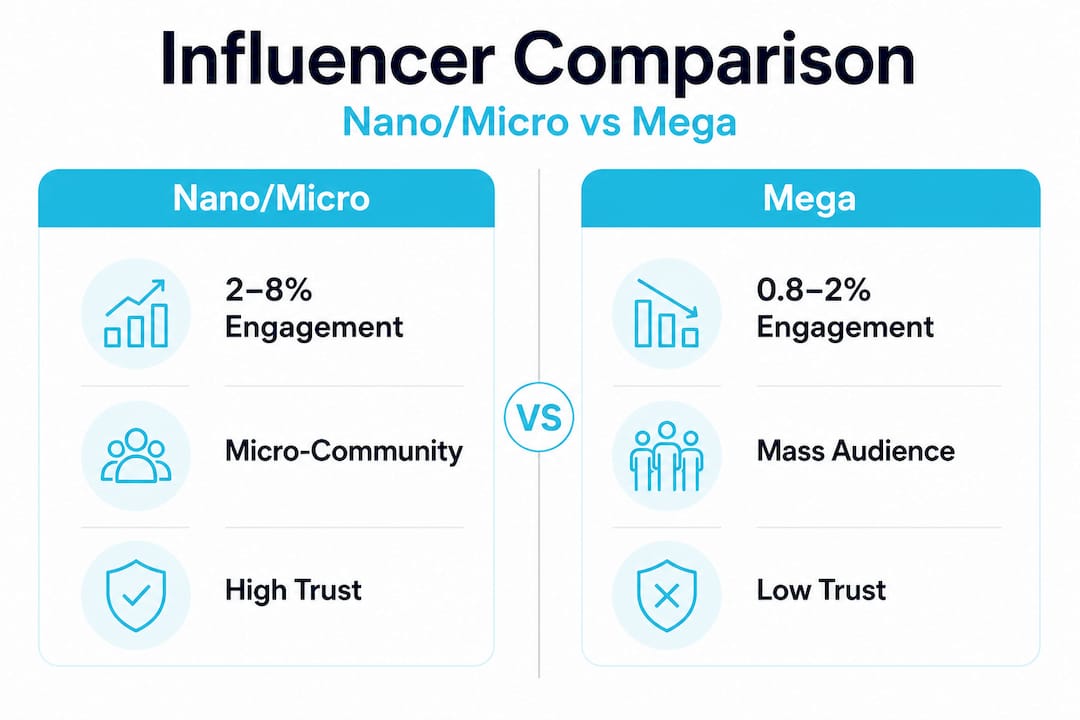
The role of social media community impact cannot be overstated here. Smaller creators build micro-communities that behave more like brand advocates than passive consumers, and that shift in audience psychology is what drives conversion.
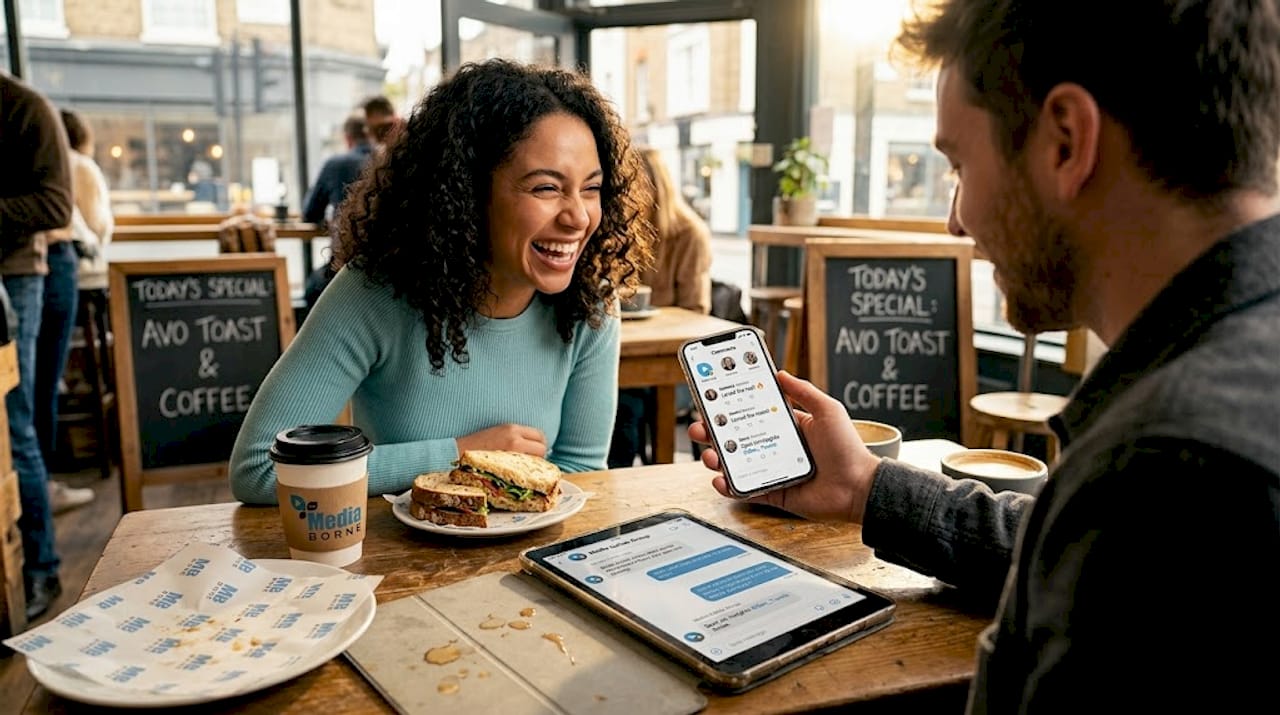
Pro Tip: Before signing any creator partnership, audit their last 30 posts manually. Look at comment quality, not just comment volume. Genuine audiences ask follow-up questions and share personal experiences. Bot-generated engagement is characterised by generic praise and emoji spam.
Here are the key selection criteria every brand should apply when vetting micro and nano-influencer partners:
- Audience alignment: Does their follower base match your customer profile, not just demographically but psychographically?
- Content consistency: Is their posting frequency and content quality stable over six months or more?
- Engagement authenticity: Are the comments substantive and conversational, rather than formulaic?
- Past partnership transparency: Have they clearly disclosed previous brand collaborations?
- Values congruence: Does their personal brand sit comfortably alongside yours without tension?
Applying branded content strategies within these parameters gives campaigns the structural strength to deliver sustained results rather than short-lived spikes.
Building high-impact creator partnerships: Strategies for brands and agencies
Knowing the value of smaller creators is only half the equation. The other half is building strategic, mutually beneficial partnerships that actually work in practice. This is where many brands stumble badly. They treat creators like an advertising slot rather than a creative collaborator, and then wonder why the content feels flat.
Salesforce's creator economy research is direct on this point: treat creators as co-creators and partners. Provide access, collaborate early, let them use their authentic voice, and track outcomes with CRM tools for proper attribution. This is not a suggestion — it is the operational difference between campaigns that underperform and those that build lasting brand communities.
Here is a step-by-step process for building creator partnerships that deliver:
-
Define your community goal first. Are you building awareness in a new market, deepening loyalty with existing customers, or driving direct conversions? Your goal shapes which creators you need and what you ask them to produce.
-
Research before you recruit. Use platform-native tools (TikTok Creator Marketplace, YouTube's BrandConnect) alongside third-party analytics platforms to identify creators with the right audience overlap. Shortlist a minimum of ten candidates for every one you approach.
-
Lead with value in your outreach. Tell creators specifically why their audience is a natural fit, what creative freedom they will have, and what you are offering beyond a fee. Creators receive dozens of bland briefs weekly — stand out by demonstrating that you have actually engaged with their content.
-
Co-create the brief. Share your brand guardrails and core message, then invite the creator to shape the format, tone, and execution. The best performing creator content almost always has fingerprints from both sides.
-
Set clear, multi-dimensional KPIs. Agree upfront on what success looks like: conversions, saves, comment sentiment, website referrals. Avoid measuring only reach and impressions, which tell you very little about commercial impact.
-
Use content hubs to extend the campaign's life. Creator content should live on your own platforms as well as theirs. Repurpose it, embed it, and build from it — this is how you turn a one-off campaign into a longer-term content asset.
-
Invest in the relationship, not just the transaction. Brief creators on upcoming product launches early. Involve them in feedback sessions. Offer exclusivity when it makes sense. Creators who feel genuinely part of a brand's journey produce meaningfully better work over time.
The brands that invest in content IP understand that creator partnerships are not a campaign cost — they are a community-building investment with compounding returns.
Common pitfalls to avoid:
- Sending restrictive creative briefs that leave creators no room to speak authentically
- Measuring success on posting day only, ignoring the long tail of content discovery
- Treating every creator the same regardless of tier, niche, or community culture
- Neglecting post-campaign analysis that would improve the next partnership
Measuring ROI and safeguarding your creator investment
After forming strong creator collaborations, ensuring your investment is both effective and compliant becomes critical. This is where many marketing teams lose ground — not because the content underperforms, but because they are measuring the wrong things.
The headline ROI figure is striking. Creator marketing delivers an average return of £5.20 per £1 spent, with top-performing campaigns achieving more than 3x that figure. Ninety-four percent of organisations report better ROI from creator marketing than from traditional digital advertising. Those are not marginal gains — they represent a fundamental shift in where marketing budgets generate the greatest return.
"Vanity metrics are the enemy of good decision-making. Reach and impressions feel meaningful until you realise they tell you nothing about whether anyone bought anything."
| Measurement type | Metric examples | What it tells you |
|---|---|---|
| Awareness | Reach, impressions | How many people saw the content |
| Engagement | Likes, saves, shares, comments | How much the content resonated |
| Conversion | Click-through rate, purchases | How many people took action |
| Attribution | UTM tracking, referral codes | Which creators drove specific sales |
| Sentiment | Comment tone, brand mentions | How the audience feels about the brand |
Effective ROI measurement requires a multi-touch attribution approach. A viewer might discover your brand through a creator's TikTok, search for you on Google, and convert three weeks later via email. Crediting only the last touchpoint dramatically undersells the creator's contribution. Integrate UTM parameters, unique discount codes, and CRM tracking to build a complete picture. Explore media production for ROI to understand how production quality connects directly to measurable commercial outcomes.
On the regulatory side, the compliance landscape has tightened considerably. FTC enforcement has seen more than 60 actions in 18 months alone. Disclosure is required for any material connection, including gifted products, even when no fee changes hands. Non-compliance risks are not limited to creators — brands and agencies can face joint liability.
A basic compliance checklist for every campaign:
- Require clear disclosure language in all creator content (for example, "#ad" or "#sponsored" prominently placed)
- Include compliance requirements in every creator contract
- Audit published content within 24 hours of going live to confirm correct disclosure
- Keep records of all partnership agreements and published posts
- Brief creators on platform-specific disclosure rules, which vary between TikTok, Instagram, and YouTube
What most brands get wrong about the creator economy
Here is the uncomfortable truth most agencies will not tell their clients: chasing virality is the surest way to erode brand loyalty. Brands see a creator achieve a viral moment and immediately try to engineer one. The results are almost universally embarrassing. Viral content is a by-product of genuine relevance — it cannot be manufactured on demand, and attempting to do so usually produces content that feels hollow to the very audiences you are trying to win.
The second major mistake is over-fixation on platform performance. Algorithms change. Platforms rise and fall. We have watched this happen repeatedly across Facebook, Snapchat, Twitter, and now increasingly with TikTok's regulatory pressures in various markets. Brands that build their creator strategy around a platform rather than around an audience are building on sand. The brands that endure build genuine communities that will follow them wherever they choose to appear next.
Perhaps the most costly mistake, though, is strangling creators with restrictive briefs. We see it constantly. A brand hands a creator a script and a product shot and wonders why the content gets a fraction of the engagement the creator normally generates. Authenticity is not a style choice — it is the literal mechanism by which creator content works. When you remove it, you remove the engine. Sophisticated marketers know that creative freedom is not a risk to manage; it is a performance lever to activate.
The innovative trends in creator marketing consistently point in the same direction: brands that win are those that think like media companies, invest in original creative collaboration, and treat creators as genuine strategic partners rather than paid distribution channels. That mindset shift is the difference between a campaign and a community.
Take your creator-powered campaigns further
The principles outlined here are powerful, but applying them consistently at scale requires the right production partner alongside the right strategic thinking. At Media Borne, we build entertainment-led content that does exactly what the best creator partnerships do: it earns attention rather than interrupting it, and it converts that attention into measurable commercial outcomes.
Whether you are looking to produce high-quality content that creators actually want to collaborate on, or you need campaign assets that translate a brand story into social-first formats, our team can help. From professional video production built for digital-first platforms to high-impact campaign videos designed to drive real conversions, we bring both the creative and strategic depth your creator economy initiatives deserve. If you are ready to move beyond ad placements and build something that lasts, we would love to talk.
Frequently asked questions
What is the creator economy?
The creator economy refers to all individuals who make income by producing digital content and building online communities, extending well beyond traditional influencers. The global market is estimated between $250 billion and $480 billion worldwide.
How do brands measure ROI on creator partnerships?
Brands assess ROI by tracking conversions, sales attribution, and multi-platform engagement rather than vanity metrics alone. Top creator campaigns average $5.20 return per $1 spent, with the strongest performers exceeding three times that figure.
Are micro-influencers really more effective than celebrities?
Yes, micro and nano-influencers consistently achieve higher engagement rates of 2 to 8 percent and build deeper audience trust than mega-influencers. Salesforce data confirms they deliver better ROI for the majority of brands across most product categories.
What are the key risks in creator marketing?
The major risks are influencer fraud, platform algorithm shifts, and tightening regulatory requirements around disclosure. FTC enforcement has accelerated sharply, with disclosure now required for any material connection including gifted products.