

TL;DR:
- True brand awareness is built through emotional connection, not just impressions.
- Micro-community targeting and UGC are highly effective for increasing brand visibility in 2026.
- Combining brand and performance marketing with proper measurement drives sustainable growth.
Exposure is not the same as awareness, and the brands discovering this difference are the ones growing fastest right now. Flooding every channel with adverts might generate impressions, but impressions without resonance are largely worthless. True brand awareness is built when people feel something, remember something, and choose to return. The strategies behind that kind of recognition have shifted dramatically, blending performance marketing with community-driven content, social listening, and formats designed to entertain first and sell second. This guide breaks down exactly how leading e-commerce and entertainment brands are making it happen in 2026.
Table of Contents
- Why brand awareness matters in 2026: Evolving challenges and opportunities
- Winning with social content: Micro-influencers, video, and UGC in action
- Putting measurement at the core: Proving and improving brand impact
- Striking the right balance: Blending brand and performance marketing for growth
- Editorial perspective: What most marketing playbooks miss about brand awareness
- Take your brand awareness to the next level with professional support
- Frequently asked questions
Key Takeaways
| Point | Details |
|---|---|
| Micro-influencers drive results | Partnering with micro-influencers and using short-form video can massively boost brand awareness and engagement. |
| Measurement fuels improvement | Effective awareness building relies on tracking both hard numbers and social sentiment, not just surface-level metrics. |
| Blending strategies is best | Combining consistent brand building with performance-driven campaigns yields superior long-term growth. |
| Authenticity wins trust | Using social listening and authentic content makes your audience more likely to engage and remember your brand. |
Why brand awareness matters in 2026: Evolving challenges and opportunities
Brand awareness is no longer simply a soft metric your board tolerates while waiting for conversion numbers. The relationship between awareness and commercial outcomes has tightened considerably, and c-suite executives are demanding clearer evidence of its impact. C-suite scepticism is rising sharply, with only 69% of CMOs valuing long-term brand marketing highly, down from 80% in 2024. That is a significant drop, and it reflects a broader tension between short-term ROI pressures and the slower, compounding value of brand investment.
The challenge for marketing professionals is real. Performance marketing delivers measurable clicks and conversions quickly. Brand building, by contrast, influences perception over months and years. The temptation is to sacrifice brand spend in favour of immediate results. But research consistently shows this is a false economy. Brands that sustain investment in awareness during competitive periods emerge with stronger pricing power, deeper customer loyalty, and lower acquisition costs over time.
"The brands winning in 2026 are not choosing between brand and performance. They are engineering systems where each discipline amplifies the other."
What has genuinely changed is the toolset available. Brand-led media approaches have become viable for brands at many different scales, not just those with broadcast budgets. Social listening technology now allows marketers to identify micro-communities, which are tightly connected groups of consumers organised around specific interests or identities, before those communities become mainstream. Getting in early, speaking authentically, and building a genuine presence within these groups delivers disproportionate awareness relative to spend.
Here are the key opportunities shaping brand awareness strategy in 2026:
- Micro-community targeting: Reaching smaller, highly engaged audiences produces stronger brand recall than mass broadcasting.
- Social listening as intelligence: Monitoring organic conversation reveals unmet needs, emerging language, and cultural shifts your audience cares about.
- Entertainment-led formats: Short-form video, live social events, and serialised content outperform static adverts for capturing and holding attention.
- Creator partnerships at scale: Working with multiple micro-influencers across niches generates both reach and trust simultaneously.
- Platform algorithm advantage: Consistent, engaging content signals reliability to algorithms, compounding organic reach over time.
Understanding this landscape is the foundation. With a clear sense of the contemporary brand landscape, let us explore the hands-on strategies driving measurable awareness today.
Winning with social content: Micro-influencers, video, and UGC in action
The evidence is no longer anecdotal. Social-first content strategies, especially those combining micro-influencers, short-form video, and user-generated content (UGC), are delivering results that traditional advertising simply cannot match for e-commerce and entertainment brands.
Consider what Allbirds achieved on TikTok. By deploying micro-influencers alongside short-form video content and localised creative assets, they grew sales by 178% within 90 days. The campaign structure was disciplined: five posts per week, videos between 21 and 34 seconds, remarketing sequences layered on top, and creatives adapted for different regional audiences. This was not a one-off lucky campaign. It was a repeatable, engineered system.
UGC sits at the heart of why this approach works so well. When real customers create content about your brand, it carries a credibility that no polished studio production can replicate. UGC drives 32% higher engagement than traditional brand posts, and that difference compounds significantly when the content is distributed through micro-influencer networks who share your target audience's values and vocabulary.
The best channels for brand awareness in 2026 are:
- TikTok: Algorithm rewards content quality over follower count, giving newer brands a genuine path to organic reach.
- Instagram Reels: Strong for lifestyle and product discovery, particularly in fashion, beauty, and entertainment verticals.
- YouTube Shorts: Increasingly valuable for searchable content that builds awareness alongside long-term SEO benefit.
- Pinterest: Often underestimated for e-commerce, particularly for home, food, and fashion categories.
| Platform | Best content type | Audience strength | Key metric |
|---|---|---|---|
| TikTok | Short-form video, UGC | Gen Z, Millennials | Views, shares, follows |
| Instagram Reels | Visual storytelling | Millennials, Gen X | Saves, reach, story clicks |
| YouTube Shorts | Educational, behind-the-scenes | Broad, search-driven | Subscribers, watch time |
| Inspirational, product | Purchase-intent audiences | Saves, click-throughs |
Structuring a content calendar around these platforms requires discipline. The Allbirds model is instructive: daily-ish posting, short runtimes, and always a clear creative hook within the first two seconds. To boost social engagement consistently, your calendar should build rhythm rather than relying on isolated moments of virality.

For entertainment brands, the approach carries additional nuance. Your content must compete with professional programming for attention. Investing in viral video strategies that blend storytelling with brand messaging is essential. Audiences do not resist advertising when it entertains them. They resist interruption.
Staying on top of platform shifts and algorithm behaviour is non-negotiable. Regularly reviewing social media insights helps you spot emerging trends before competitors do.
Pro Tip: Launch a structured UGC campaign by incentivising customers with recognition, features, or small rewards in exchange for authentic content. Even a modest volume of genuine customer videos can outperform a significant paid production budget when distributed intelligently.
Now that we know what works, let us break down how to properly measure and optimise impact.
Putting measurement at the core: Proving and improving brand impact
Proving the value of brand awareness to decision-makers remains one of the most persistent frustrations in marketing. The challenge is not just technical. It is political. Executives want numbers that connect to revenue, and brand metrics have traditionally felt too abstract to satisfy that demand.
The data reflects the problem clearly. Only 55% of marketers allocate 60% or more of their budget to brand building, despite evidence that this level of investment delivers the strongest long-term commercial outcomes. Underinvestment in brand is often a measurement problem masquerading as a budget problem.
The solution lies in building a layered measurement framework that speaks both to brand health and commercial performance. Here is how the key metrics break down:
| Metric | What it measures | Why it matters |
|---|---|---|
| Organic social reach | How many people see brand content without paid promotion | Indicates genuine audience interest |
| Branded search volume | Searches using your brand name | Strong predictor of purchase intent |
| Share of voice | Your brand mentions versus competitors | Tracks competitive positioning |
| Social mentions and sentiment | Volume and tone of organic conversation | Reveals audience perception in real time |
| Engagement rate | Interactions relative to reach | Measures content resonance |
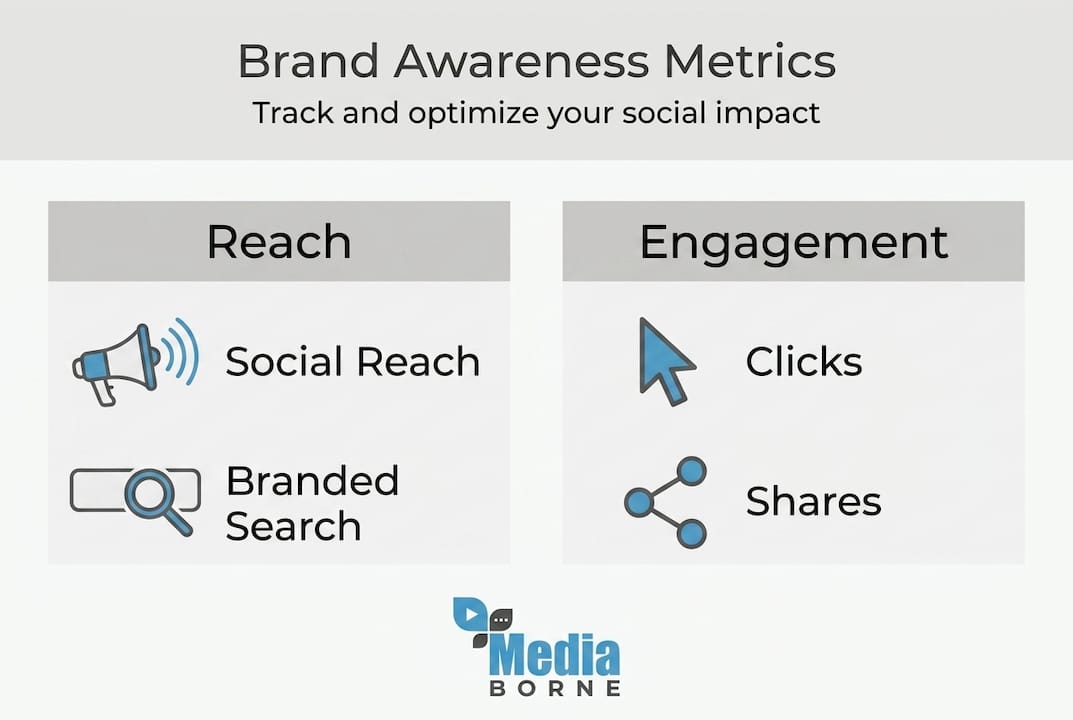
The most powerful approach combines this quantitative data with qualitative intelligence from social listening. Sentiment analysis, which is the practice of evaluating whether social mentions carry positive, negative, or neutral emotional tone, adds a dimension that raw reach figures cannot provide. A campaign might generate significant reach but leave audiences feeling lukewarm. Sentiment analysis catches this before it becomes a brand equity problem.
Key steps for building a robust measurement system:
- Set baselines before launching campaigns so you have something to measure change against.
- Monitor branded search weekly using tools like Google Search Console and Google Trends.
- Track share of voice monthly using social listening platforms such as Brandwatch or Sprinklr.
- Review sentiment shifts after every major campaign or content push.
- Connect awareness metrics to mid-funnel behaviour, such as time on site and return visits, to build a revenue bridge for stakeholders.
For deeper reading on connecting these numbers to commercial outcomes, exploring measuring marketing ROI is time well spent. And building strategic content planning into your measurement cadence ensures data informs future creative decisions rather than simply recording the past.
For authoritative brand measurement insights, industry research remains an essential reference point as methodologies continue to evolve.
Armed with measurement techniques, it is time to see how combining brand and direct-response approaches leads to real-world gains.
Striking the right balance: Blending brand and performance marketing for growth
The false choice between brand building and performance marketing has cost many companies years of wasted budget and missed opportunity. The most effective brands in 2026 do not debate which approach to prioritise. They engineer a deliberate split between the two.
Research points clearly to an optimal allocation. The most effective split for B2C brands is 60% directed at brand building and 40% towards performance marketing. This ratio ensures the long-term awareness work continues building equity while performance campaigns convert the demand that brand investment creates. Without the brand layer, performance marketing faces increasing costs and diminishing returns. Without the performance layer, brand investment struggles to demonstrate tangible commercial value.
Social listening enhances both brand authenticity and campaign effectiveness by giving marketers a continuous stream of real audience intelligence. When you understand the specific language, concerns, humour, and aspirations of your audience, you can mirror these authentically across both brand and performance content. This is not manipulation. It is relevance, and relevance is what earns attention in an overcrowded feed.
Practical steps to implement this balance effectively:
- Audit your current spend ratio to understand where your investment actually sits right now.
- Identify your highest-performing brand content and use it to inform performance creative briefs, because what audiences engage with organically often converts well when amplified.
- Use social listening to discover your audience's language before writing any campaign copy, whether for brand or performance purposes.
- Set separate KPIs for brand and performance campaigns so each is evaluated on its own merits rather than a single blended metric that obscures both.
- Create feedback loops so performance data informs brand creative and brand insights improve performance targeting.
For e-commerce brands, brand-led media strategies offer a framework for how entertainment content can serve both awareness and commercial objectives simultaneously. For entertainment brands, a well-constructed social video strategy ties episodic content to conversion moments without breaking the narrative contract with the audience.
Pro Tip: Before briefing any campaign, spend two hours reviewing recent organic conversations about your brand and your category. The words, phrases, and emotions you find there are far more persuasive than anything crafted in isolation. Mirror your audience's authentic voice and watch engagement lift noticeably.
Now, let us look beyond standard advice and share what truly separates outstanding brands from the rest.
Editorial perspective: What most marketing playbooks miss about brand awareness
Most brand awareness advice stops at the surface. Post consistently. Use micro-influencers. Invest in video. All true, and all insufficient on their own. The uncomfortable reality is that execution without genuine audience understanding produces content that looks right but does not land.
We see this regularly. Brands invest in polished short-form video, follow every platform best practice, and still find their content generating respectable reach but no meaningful community growth. The missing ingredient is almost always depth of audience intelligence. Superficial metrics like follower count and raw impressions feel reassuring, but they often obscure a fundamental disconnection between what brands are saying and what audiences actually care about.
The brands that achieve genuine awareness traction are those that treat content as an ongoing experiment rather than a finished product. They test formats, channels, and creative angles continuously. They listen more than they broadcast. And they measure media production for brand ROI with the same rigour applied to paid conversion campaigns.
Perhaps most critically, they prioritise authenticity over aesthetics. A shaky, genuine piece of UGC will outperform a beautiful studio production if it resonates more deeply with the target audience. The brands fixated on perfect visual identity often sacrifice the spontaneity and warmth that actually builds affinity. Adaptability, curiosity, and a genuine willingness to be shaped by audience response are what separate lasting brand awareness from fleeting exposure.
Take your brand awareness to the next level with professional support
Building brand awareness at scale requires more than a strong strategy document. It requires the creative infrastructure, platform expertise, and production capability to execute consistently across channels while maintaining the quality audiences expect.
At Media Borne, we combine video production support with strategic marketing intelligence to help e-commerce and entertainment brands build awareness that converts. Whether you need high-impact social content, social selling solutions that turn live audiences into paying customers, or brand partnership options that place your brand inside premium entertainment content, we design programmes that deliver measurable outcomes. If the strategies in this article resonate, we would love to explore what is possible for your brand.
Frequently asked questions
What are the most effective brand awareness strategies for e-commerce in 2026?
Tightly focused social campaigns combining micro-influencers, short-form video, and authentic user-generated content are currently leading methods, with Allbirds achieving 178% sales growth in just 90 days using this approach on TikTok.
How can I measure brand awareness effectively?
Combine quantitative metrics such as social reach, branded search volume, and engagement rate with qualitative methods like social listening and sentiment analysis to build a complete and defensible picture for stakeholders.
Why are micro-influencers more effective than celebrity endorsers for awareness?
Micro-influencers connect deeply with specific micro-communities over mass reach, producing higher authenticity and engagement than celebrity campaigns that broadcast to broadly defined, lower-intent audiences.
What is the best way to balance brand and performance marketing?
A 60/40 brand-to-performance split is considered optimal for B2C brands, ensuring sustained equity building alongside the conversion activity that demonstrates short-term commercial value to decision-makers.