
TL;DR:
- A social media strategy is a documented plan that aligns a brand’s content, goals, and KPIs with measurable business outcomes. It prevents creator drift, optimizes content for algorithms, and ensures social listening informs product and leadership decisions. Regular quarterly reviews and focused platform-objective alignment are essential for sustained growth and meaningful ROI.
A social media strategy is a documented plan that directs an organisation's use of social platforms to achieve specific business objectives, and without one, every post is a guess. Teams without strategy risk fragmented reporting and wasted budget on vanity metrics that never connect to revenue. The role of social media in business has shifted from broadcasting to a two-way channel for building audiences, generating leads, and gathering intelligence. Tools like HubSpot, Sprout Social, and platform-native analytics have made measurement more precise, but only when there is a strategy to measure against. The benefits of social media strategy are not theoretical. They are operational, financial, and competitive.
Why social media strategy matters for brand consistency
A social media strategy functions as a single source of truth for every person who creates, approves, or publishes content on behalf of a brand. Without this document, content decisions get made in a vacuum, and the result is a fragmented brand voice that confuses audiences and undermines trust. Different creators on different platforms will default to their own instincts, producing content that feels disconnected even when the underlying message should be unified.

This problem is known as creator drift. It happens gradually. A copywriter on LinkedIn writes in a formal register, a social manager on TikTok goes casual and off-brand, and a paid media team runs ads with a tone that matches neither. Individually, each piece of content might perform adequately. Together, they erode the coherent identity that makes a brand memorable.
A strategy document prevents this by defining messaging pillars, tone guidelines, and platform-specific adaptations in one place. It also coordinates organic posts, community engagement, and paid campaigns so they reinforce each other rather than pulling in different directions.
The practical consequences of inconsistency are measurable. Audiences who encounter conflicting brand signals are less likely to follow, share, or convert. For marketing professionals managing multiple channels or agencies, a strategy document is the operational backbone that keeps execution coherent.
- Define tone of voice with specific examples for each platform
- Create a messaging hierarchy with primary, secondary, and tertiary themes
- Set approval workflows that include a brand consistency check
- Review all active content quarterly against the strategy document
Pro Tip: Build a one-page brand voice card that every content creator, freelancer, or agency partner receives before producing a single piece of content. It takes two hours to create and saves weeks of revision.
How does strategy affect platform algorithms and content reach?
Platform algorithms do not distribute content equally. They rank posts by predicted engagement probability, which means the early signals a post generates in its first minutes determine whether it reaches hundreds or hundreds of thousands of people. Strategy determines what those early signals will be, because it defines who the content is for, what format it takes, and what response it is designed to trigger.
X's recommendation system, built on a Grok-based transformer model, uses engagement history and predicted interaction rates as core inputs to relevance scoring. The implication is direct: content created without a clear audience definition and engagement intent will generate weak early signals and receive minimal distribution, regardless of production quality.
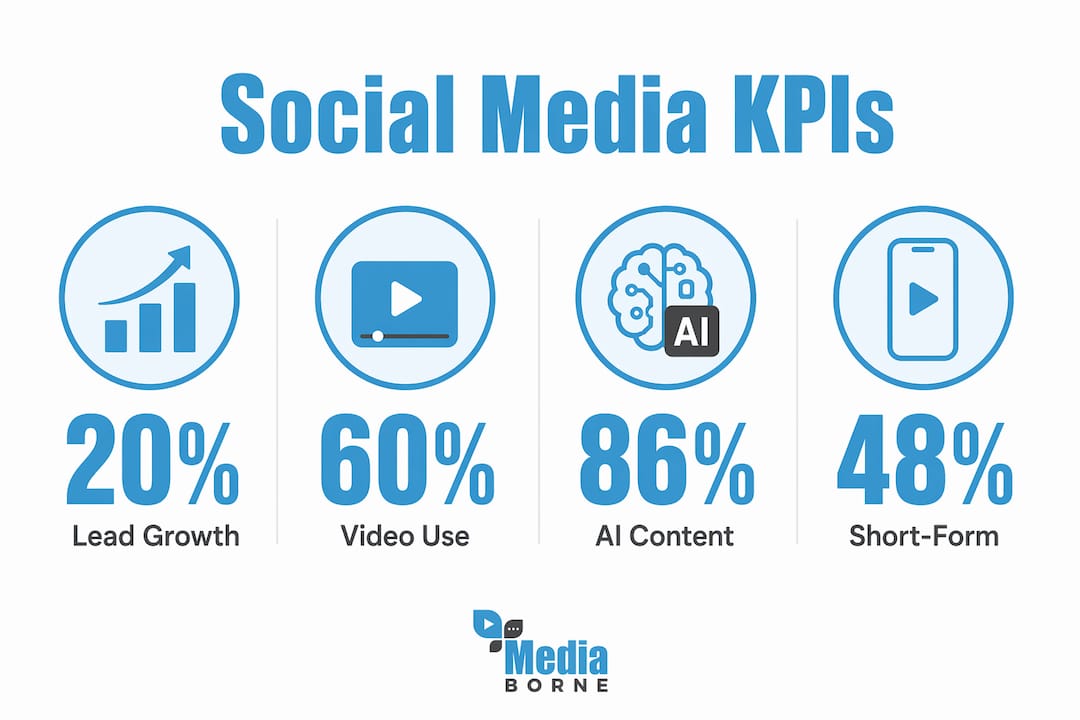
Format choices matter enormously here. 60.1% of marketers use short-form video in 2026, with 48.6% citing it as the format delivering the highest return on investment. That is not a coincidence. Short-form video generates faster engagement signals, which algorithms reward with broader reach. A strategy that ignores format preferences is leaving distribution on the table.
| Content format | Algorithm signal strength | Best platform fit |
|---|---|---|
| Short-form video (under 60 seconds) | High. Fast engagement signals | TikTok, Instagram Reels, YouTube Shorts |
| Long-form video (over 10 minutes) | Medium. Watch time weighted | YouTube |
| Static image posts | Medium. Saves and shares valued | Instagram, LinkedIn |
| Text-only posts | Variable. Depends on reply velocity | X, LinkedIn |
| Live video | High. Real-time engagement prioritised | TikTok, YouTube, Instagram |
Pro Tip: When launching new content, seed it with your most engaged community members first. A small group of genuine early responders generates the engagement signals that trigger wider algorithmic distribution.
Authentic content also outperforms polished but impersonal production in most social contexts. 86.5% of marketers use AI tools in their workflows, yet 73.4% combine AI with human content creation to preserve authenticity. Audiences can detect when content is purely generated, and they engage less. Strategy should specify where AI aids efficiency and where human voice is non-negotiable.
What KPIs should a social media strategy include?
The most common failure in social media measurement is tracking what is easy rather than what matters. Likes, follower counts, and impressions are visible and satisfying to report, but they rarely correlate with revenue, customer acquisition, or brand equity. A social media plan built around vanity metrics will produce reports that look good and deliver nothing.
Mapping KPIs to funnel stages is the framework that separates meaningful measurement from noise. Awareness-stage content should be measured by reach, share of voice, and new audience growth. Consideration-stage content maps to engagement rate, click-through rate, and time on site. Conversion-stage content connects directly to leads generated, cost per acquisition, and revenue attributed to social channels.
SMART goals provide the structure. A goal like "increase social-attributed leads by 20% in Q3 by publishing three educational LinkedIn posts per week" is specific, measurable, and tied to a business outcome. "Grow our Instagram presence" is not a strategy. It is a wish.
Quarterly structured reviews of 90 minutes, combining performance analysis with new goal-setting, prevent tactic drift and keep the strategy aligned with shifting business priorities. Without these reviews, teams continue executing tactics that made sense six months ago but no longer serve current objectives.
Best practices for social media KPI selection:
- Assign each KPI to a specific funnel stage and business objective
- Limit your primary KPI set to five or fewer metrics to maintain focus
- Include at least one revenue-adjacent metric in every quarterly report
- Track engagement rate over raw engagement numbers to account for audience growth
- Set a baseline in the first 30 days before committing to growth targets
For marketing professionals presenting to senior leadership, the ability to connect social activity to ROI is the difference between a budget that grows and one that gets cut. Strategy makes that connection possible. You can find a practical social media marketing checklist that covers KPI frameworks and quarterly review structures in detail.
How social listening turns social media into business intelligence
Social media teams are the closest point of contact between a brand and its customers in real time. Sprout Social frames this as a dual role: active engagement and passive listening, both of which feed intelligence back into the wider organisation. Most brands use only the first half of that equation.
Social listening captures what customers say when they are not speaking directly to a brand. Complaints posted publicly, comparisons made with competitors, feature requests buried in comment threads, and sentiment shifts following a product launch are all data points that product, R&D, and leadership teams rarely see unless social is structured to surface them. Customer feedback gathered through social channels can validate product roadmaps and directly influence innovation cycles.
The business intelligence value of social listening extends well beyond marketing. Here are the primary applications:
- Product validation. Monitor reactions to new features or launches to identify friction points before they become support tickets or churn.
- Competitor intelligence. Track what customers say about competing products to identify gaps your brand can address.
- Crisis detection. Identify negative sentiment spikes early enough to respond before they escalate into reputational damage.
- Content ideation. Surface the exact language customers use to describe their problems, then use that language in your messaging.
- Market trend identification. Spot emerging topics and conversations in your category before they reach mainstream media.
Proactive engagement, responding to comments, acknowledging feedback, and joining relevant conversations, builds the kind of trust that paid advertising cannot replicate. Brands that treat social as a broadcast channel miss the intelligence layer entirely. Those that treat social as two-way gain a continuous feed of customer insight that sharpens every other business function.
Pro Tip: Route social listening findings into a shared document that product, customer success, and leadership teams can access weekly. The insights are only valuable if they reach the people who can act on them.
For a deeper look at how social video strategy can amplify both engagement and listening signals, Media Borne's guide covers the mechanics in detail.
Key takeaways
A social media strategy is the operational document that connects every post, campaign, and engagement to a measurable business outcome, making it the single most important tool for marketing professionals managing social at scale.
| Point | Details |
|---|---|
| Strategy prevents creator drift | A documented brand voice and messaging hierarchy keeps all creators aligned across platforms. |
| Algorithms reward strategic content | Early engagement signals, driven by audience clarity and format choice, determine distribution reach. |
| KPIs must map to funnel stages | Vanity metrics mislead. Connect each KPI to awareness, consideration, or conversion to prove ROI. |
| Social listening feeds the whole business | Route customer feedback and competitor intelligence from social into product and leadership workflows. |
| Quarterly reviews sustain alignment | A 90-minute structured review each quarter prevents tactic drift and keeps goals current. |
Why I think most brands are still treating social as a checkbox
After working across brand strategy and content production for years, the pattern I see most consistently is this: businesses invest in social media activity without ever investing in social media thinking. They hire a content manager, set up a posting schedule, and call it a strategy. It is not.
The brands that grow through social are the ones that treat it as a strategic channel with the same rigour they apply to paid search or product development. They define what success looks like before they post anything. They review performance with the same seriousness as a sales pipeline review. They connect what happens on TikTok or LinkedIn to what happens in their revenue figures.
The uncomfortable truth is that most social media efforts fail not because the content is bad, but because there is no clear answer to the question: what is this for? When you cannot answer that, you optimise for the wrong things. You chase followers instead of customers. You celebrate reach instead of revenue.
My advice is to start smaller than you think you need to. Pick two platforms. Define three business objectives. Set five KPIs. Review them every 90 days. That focused approach will outperform a sprawling, unfocused presence on every platform every time. The social media strategy tips that actually work are rarely complicated. They are just consistently applied.
— Stephen
How Media Borne helps brands execute social strategy through content
A strategy without content is just a document. The brands that see the greatest social media strategy impact are those that pair clear objectives with production quality that earns attention in competitive feeds.
Media Borne builds original content formats, social selling video, and entertainment-led campaigns designed to generate the early engagement signals that algorithms reward. From social selling video production that converts audiences into customers, to full-scale production for TikTok, YouTube, and live social formats, every project is built around a defined strategic outcome. If your content is not performing at the level your strategy demands, the production layer is worth examining.
FAQ
What is a social media strategy?
A social media strategy is a documented plan that connects an organisation's social media activity to specific business objectives, defining target audiences, content formats, KPIs, and review processes. Without this document, social efforts lack direction and produce inconsistent results.
Why does social media strategy matter for small businesses?
Social media strategy matters for small businesses because it prevents wasted time and budget on activity that does not connect to revenue. A focused strategy with two or three platforms and clearly defined goals consistently outperforms an unfocused presence across many channels.
How does social media strategy affect algorithm performance?
Platform algorithms rank content by predicted engagement probability, so strategy directly influences distribution. Content created with a defined audience, clear intent, and the right format generates stronger early signals, which triggers wider algorithmic reach.
What KPIs should be in a social media strategy?
KPIs should map to funnel stages: reach and share of voice for awareness, engagement rate and click-through rate for consideration, and leads generated or cost per acquisition for conversion. Limiting your primary KPI set to five metrics maintains focus and simplifies executive reporting.
How often should a social media strategy be reviewed?
A quarterly review of 90 minutes, combining performance analysis with updated goal-setting, is the recommended cadence. This prevents tactic drift and keeps the strategy aligned with current business priorities and platform changes.