
TL;DR:
- Participation media involves active audience contribution to influence media content and foster community. Structured, meaningful engagement builds loyalty, trust, and measurable increases in views and subscriptions. Implementing consistent workflows and offline events ensures genuine participation and long-term success.
Participation media is defined as a model in which audiences actively contribute to, shape, and co-create media content rather than passively consuming it. This is distinct from simple interactivity, where a user clicks or reacts. Genuine participation means the audience influences editorial direction, story selection, or content production itself. Platforms like Hearken and Contribly have built entire workflows around this principle, and the results are measurable. Structured participation initiatives generate six times more page views and four times more time-on-page than standard articles. For content creators and marketers, that gap represents the difference between an audience that visits and one that belongs.
What is participation media and how does it differ from UGC?
Participation media is the practice of involving audiences as active contributors and collaborators in media production, not merely as sources of user-generated content. The distinction matters enormously. Most media brands use UGC as illustrative material rather than for genuine co-creation, which limits how deeply audiences can influence the work. Participation media goes further: it gives audiences a visible role in shaping what gets made and why.

Media scholar Henry Jenkins identified the core tension here. Technological interactivity alone is not sufficient for participation. Cultural norms must validate audience contributions as valuable and influential. A comments section is interactive. A newsroom that builds its editorial calendar around reader-submitted questions is participatory. The technology enables the exchange, but the culture determines whether it means anything.
The definition of participation media also encompasses a spectrum of involvement. At the lighter end, audiences serve in advisory roles, answering polls or submitting questions. At the deeper end, they become co-owners. The Bristol Cable cooperative, for example, has over 2,200 members who vote directly on budgets and editorial priorities for £1 per month. That is cooperative ownership as a participation model, and it represents the furthest point on the spectrum.
How does participation media work in practice?
Participation media operates through structured mechanisms that invite specific, purposeful audience input rather than open-ended requests. The operational difference is significant. Structured call-outs framed around specific, time-bound questions increase audience submissions fivefold over open-ended requests. Asking "What is your biggest concern about housing costs in Bristol this month?" produces far more usable material than "Tell us what you think."
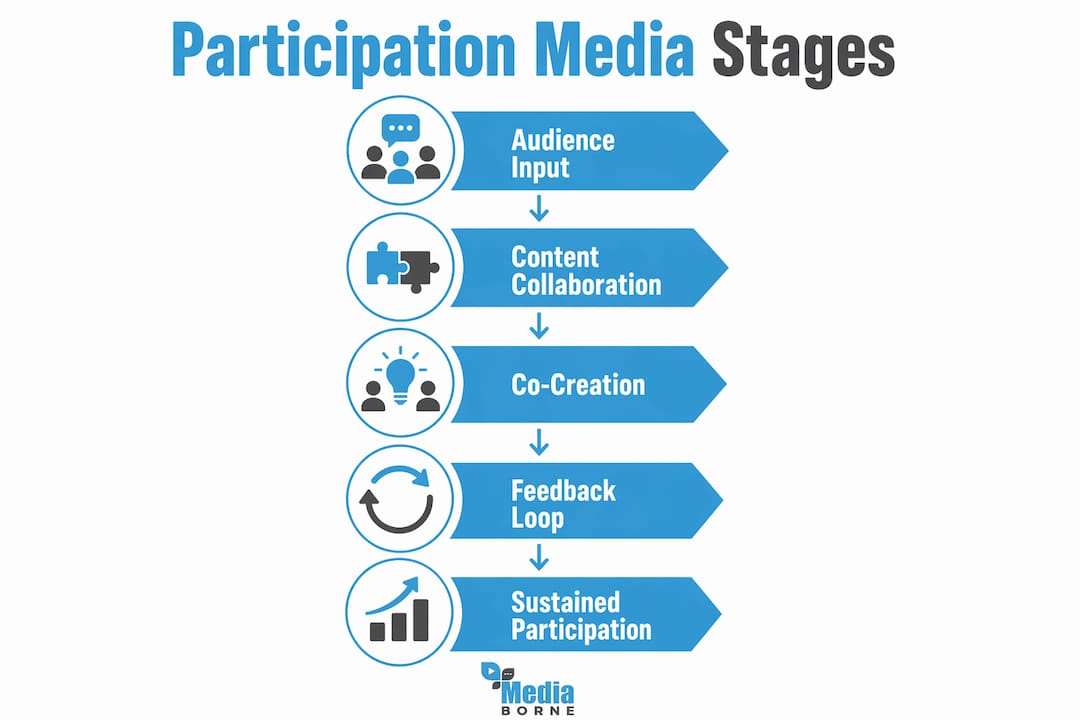
The participation spectrum shapes how different audience members engage with the same content ecosystem:
- Contributors submit original material, answer specific questions, or share lived experience that journalists then contextualise and publish.
- Co-creators work alongside editorial teams to shape story angles, suggest sources, or participate in the production process itself.
- Observers follow the participation process without contributing directly, but their presence validates the community and signals openness to newcomers.
Tools like Hearken and Respondens embed these workflows directly into publishing infrastructure, allowing editorial teams to manage submissions, track engagement, and close feedback loops without manual overhead. The Dutch Mediahuis group used this approach to collect hyperlocal audience insights at scale, shifting from reactive UGC collection to structured participation that journalists could actually use in their reporting.
Feedback loops are the mechanism that sustains participation over time. When contributions are ignored, audience willingness to return diminishes sharply. Crediting participants visibly, publishing follow-up responses, and closing the loop publicly are not optional courtesies. They are the operational requirements for keeping participation alive.
Pro Tip: Design every participation call-out with a clear deadline and a stated outcome. Tell your audience what you will do with their input and when. This single change transforms a vague invitation into a credible commitment.
Examples of participation media models in real-world use
The range of participation media models in practice is broader than most marketers realise. The examples below span journalism, branded content, and community media, and each demonstrates a different mechanism for generating audience involvement.
De Correspondent, the Dutch membership publication, built its entire editorial model around reader expertise. Subscribers are treated as specialists in their own fields, and journalists actively solicit their knowledge before and during reporting. This approach helped progressive participatory newsrooms increase content relevance by 14 percentage points in a single year, moving from 3% to 17% audience interest by shifting to community-driven reporting alongside a 50% reduction in routine coverage.
Hungarian outlets 24.hu and Nyugat.hu took participation offline. Live events and offline participation formats built trust and economic sustainability by enabling direct personal interaction between journalists and audiences. Live podcast recordings and panel discussions satisfy psychological needs that digital-only formats cannot meet, strengthening loyalty in ways that no algorithm can replicate.
The table below compares the main participation models by their defining features:
| Model | Audience role | Depth of influence | Example |
|---|---|---|---|
| Advisory | Responds to polls and questions | Low to medium | Reader Q&A newsletters |
| Contributory | Submits original material for editorial use | Medium | Hearken-powered newsrooms |
| Co-creation | Shapes story angles and production | High | De Correspondent membership |
| Cooperative ownership | Votes on budgets and editorial priorities | Very high | The Bristol Cable |
| Offline participation | Attends live events and discussions | Medium to high | 24.hu live journalism events |
For content creators working in branded media, the contributory and co-creation models are the most transferable. Asking your community to submit questions for a product review series, or inviting customers to co-design a content format, produces interactive media that audiences feel ownership over. That sense of ownership is what drives the engagement numbers.
Why participation media matters for audience loyalty and trust
Participation media creates something that neither paid advertising nor algorithmic distribution can manufacture: brand memory rooted in personal contribution. Audience participation creates brand memory and emotional connections that AI-generated summaries cannot replicate. When a reader's question shapes a story, or a viewer's suggestion becomes a video series, that person carries a different relationship with the brand than any passive consumer ever could.
This matters strategically as AI-generated content floods every channel. The brands and media outlets that will differentiate themselves are those that offer something AI cannot produce: genuine human community and the feeling of being heard. Visible participation signals openness and authenticity in a way that polished, one-directional content never can.
"Participation is relational. It depends on visible feedback loops and consistent recognition. Without those, it is just a survey." This insight from WAN-IFRA's 2026 publishing infrastructure report captures what most brands miss when they attempt participation media without committing to the cultural shift it requires.
The economic case is equally strong. Membership and subscription models built on participation outperform those built on content volume alone. In low-trust media markets, audience participation helps build credibility and sustain subscriptions by creating personal connections through live events. The Bristol Cable's £1 per month cooperative model demonstrates that depth of involvement, not price point, drives retention.
Pro Tip: Track participation as a business metric, not just an engagement metric. Measure how participation touchpoints correlate with subscription renewals, repeat visits, and content sharing. The data will make the case for investing further.
For marketers building customer engagement strategies, participation media is the mechanism that converts an audience into a community. Communities are far harder to displace than audiences.
How to implement participation media in your content strategy
Implementing participation media effectively requires structural commitment, not a one-off campaign. The following steps reflect what publishers and content teams with sustained participation programmes actually do differently.
-
Design specific, time-bound call-outs. Replace vague invitations with precise questions tied to a deadline and a stated outcome. "We are reporting on freelance tax changes in April. Share your experience by Friday and we may include your story" is a participation call-out. "Let us know your thoughts" is not.
-
Embed participation into your editorial workflow. Economic sustainability in participatory media depends on removing operational drag and treating participation as core infrastructure, not an afterthought. Assign a team member to manage submissions, close feedback loops, and credit contributors visibly in published content.
-
Balance editorial control with genuine audience influence. Professional editorial judgement remains crucial. Community input guides but does not replace journalists' and creators' decisions. The goal is a genuine dialogue, not a referendum on every editorial choice.
-
Incorporate offline and live formats. Offline participatory elements such as live podcast recordings and panel discussions satisfy psychological needs unmet by digital-only experiences. Even a single live event per quarter can deepen loyalty in ways that months of online interaction cannot match.
-
Avoid performative participation. The most damaging mistake is inviting contributions and then ignoring them. Audiences notice immediately, and the reputational cost is disproportionate to the effort saved. If you cannot commit to closing the loop, do not open it.
Key takeaways
Participation media works because it converts passive audiences into invested contributors, creating emotional connections and measurable engagement that one-directional content cannot achieve.
| Point | Details |
|---|---|
| Definition is precise | Participation media requires genuine audience influence over content, not just interaction or UGC collection. |
| Structure drives results | Specific, time-bound call-outs generate five times more submissions than open-ended requests. |
| Feedback loops are non-negotiable | Ignored contributions destroy participation programmes. Visible crediting and follow-up are operational requirements. |
| Offline formats deepen loyalty | Live events satisfy psychological needs that digital participation alone cannot meet. |
| Economic model alignment | Participation media supports membership and subscription sustainability by building community rather than just content volume. |
Why participation media is the next frontier for brand-led content
The brands I see winning with participation media are not the ones with the most sophisticated tools. They are the ones that have made a genuine cultural commitment to treating their audience as collaborators. That shift is harder than it sounds, and most organisations underestimate it.
The common mistake is treating participation as a campaign mechanic: run a contest, collect submissions, publish a roundup, move on. That approach produces a spike in engagement and then silence. Real participation media is structural. It changes how you plan content, how you brief your team, and how you measure success. The newsletter sign-up rate of 2.76% from structured participation, compared to 0.01% from standard articles, is not a campaign result. It is the outcome of a different operating model.
What I find most underused is the hybrid online-offline model. Brands that combine digital participation workflows with live events create something genuinely difficult to replicate. The audience member who submitted a question online and then heard it answered on stage at a live event has a relationship with that brand that no retargeting campaign can manufacture. Media borne builds exactly these kinds of audience ecosystems, and the brands that invest in them consistently outperform those chasing reach alone.
The other thing most content teams miss is recognition. Crediting contributors by name, following up publicly on their input, and showing how their participation shaped the final content is not just good manners. It is the mechanism that turns a one-time contributor into a long-term community member. Experiment with this consistently for 90 days and the retention data will speak for itself.
— Stephen
How Media borne can help you build participatory content
Media borne specialises in creating content formats that audiences do not just watch but actively participate in. From structured video series that invite community input to live events designed around audience interaction, the team builds media that converts attention into genuine loyalty. If you are a content creator or marketer looking to move beyond passive viewership, Media borne's video production services are built for exactly this purpose. The company's portfolio spans branded entertainment, social formats, and live experiences that put audience participation at the centre of every production. Explore the work and see how participatory content translates into measurable commercial outcomes.
FAQ
What is the simplest definition of participation media?
Participation media is a model in which audiences actively contribute to and influence media content rather than simply consuming it. It goes beyond user-generated content by giving audiences genuine editorial influence.
How does participation media differ from traditional media?
Traditional media delivers content to a passive audience with no mechanism for influence. Participation media creates structured opportunities for audiences to shape what gets made, reported, or published.
Is participation media effective for brand marketing?
Structured participation initiatives generate six times more page views and newsletter sign-up rates of 2.76% compared to 0.01% for standard content, making it one of the highest-performing engagement models available to marketers.
What tools support participation media workflows?
Platforms such as Hearken and Respondens are purpose-built for managing audience participation in editorial workflows, handling submissions, feedback loops, and contributor crediting at scale.
Can participation media work for small content teams?
Yes. Even a single structured call-out per month, with a clear question, deadline, and published outcome, delivers measurable results. The key is consistency and closing the feedback loop, not the size of the operation.