

TL;DR:
- Entertainment-led content builds trust, engagement, and community, leading to measurable sales growth.
- Successful brands use affiliate UGC, strategic bidding, and frequent content refreshes for viral campaigns.
- Metrics like conversion rate, ROAS, and CPA are essential to prove ROI and guide campaign optimization.
E-commerce shelves are infinite, and attention is the only thing that's genuinely scarce. When e.l.f. Cosmetics achieved 7 billion views on TikTok through music-driven challenges and creator partnerships, the result was not just viral fame but 48% year-on-year revenue growth and the number one Gen Z market share position in their category. That kind of outcome is not a fluke reserved for beauty giants with enormous budgets. It is a repeatable, measurable consequence of choosing entertainment over interruption, and this article breaks down exactly how your brand can do the same.
Table of Contents
- Why entertainment-led content revolutionises consumer products marketing
- Proven strategies: How brands achieve viral success on social platforms
- Metrics that matter: Measuring impact and ROI in entertainment-led campaigns
- Applying the playbook: Step-by-step guide to activating entertainment-led campaigns
- Why most brands overcomplicate entertainment-led social media—and what actually works
- Take your consumer products to the next level with expert-led video production
- Frequently asked questions
Key Takeaways
| Point | Details |
|---|---|
| Entertainment boosts visibility | Making content fun and interactive is proven to drive exponential engagement and sales for consumer products. |
| Affiliate UGC scales creative | Leveraging creator partnerships offers authentic reach and keeps content fresh, even on tighter budgets. |
| Metrics drive decision-making | Successful campaigns focus on hard data like conversion, ROI and cost per order instead of vanity metrics. |
| Agility beats perfection | Quick creative refresh cycles and iterative campaigns consistently beat slow, monolithic asset strategies. |
Why entertainment-led content revolutionises consumer products marketing
Traditional advertising is losing the battle for attention at a remarkable pace. Banner blindness, ad blockers, and the sheer volume of branded messages competing for the same eyeballs have made conventional display and search campaigns progressively less efficient. Audiences, particularly Gen Z and Millennials, have developed an almost instinctive ability to scroll past anything that feels like a sales pitch.
Entertainment-led content works differently because it earns attention rather than buying it. Short, music-driven videos, creator challenges, and behind-the-scenes storytelling formats invite audiences into a brand's world rather than interrupting their experience. When a consumer watches a 30-second TikTok and genuinely laughs, learns something, or feels seen, they are far more likely to share it, follow the brand, and eventually buy.
"Brands that become part of entertainment rather than an interruption to it are the ones building genuine communities and sustainable revenue in 2026."
The shift is not just cultural. It is commercial. The results from entertainment-led social campaigns consistently outperform traditional formats across every meaningful metric: follower growth, engagement rate, cost per acquisition, and return on ad spend. When e.l.f. Cosmetics leaned into TikTok's native entertainment formats, the brand did not just get views. It got measurable commercial outcomes that reshaped its entire market position.
Key reasons entertainment-led content outperforms traditional advertising for consumer products:
- Authenticity signals trust. Creator-led content feels personal and genuine, which dramatically increases purchase intent compared to polished brand ads.
- Platform algorithms favour engagement. TikTok, Instagram Reels, and YouTube Shorts all reward content that holds attention, meaning entertaining videos get distributed far beyond your existing follower base.
- Shareability multiplies reach. A funny or emotionally resonant video gets shared organically, extending your reach without additional spend.
- Community compounds over time. Consistent entertainment-led content builds an audience that returns, engages repeatedly, and becomes a long-term commercial asset.
- Discovery replaces search. Younger consumers increasingly find new brands through entertainment feeds rather than search engines, making social content a primary acquisition channel.
Proven strategies: How brands achieve viral success on social platforms
Understanding why entertainment-led content works is one thing. Knowing exactly which mechanics to deploy is another. The brands achieving repeatable viral success are not just posting more content. They are following a disciplined, data-informed playbook that balances creative quality with strategic distribution.
Freshly Cosmetics on TikTok Shop demonstrated this clearly by combining affiliate user-generated content (UGC) with TikTok's GMV Max tool to drive massive sales growth. The approach was systematic, not accidental. Here is what the most effective brands are doing consistently.
Affiliate UGC at scale. Rather than producing all content in-house, leading brands recruit TikTok Shop affiliates and micro-creators to produce authentic videos featuring their products. This generates a high volume of diverse content at a fraction of the cost of traditional production, and it performs better because it feels real. Audiences trust a genuine creator review far more than a studio-produced ad.
Hybrid bidding strategies. The TikTok GMV Max approach uses a hybrid bidding model that combines Max Delivery (maximising reach and volume) with Target ROI (ensuring spend stays efficient). Starting with Max Delivery builds momentum and data, then switching to Target ROI locks in profitability once the algorithm has enough signal to optimise effectively.
Creative refresh on a tight cycle. Ad fatigue (the drop in performance that occurs when audiences see the same creative too many times) is one of the biggest silent killers of social campaigns. High-performing brands rotate new video creatives every 7 to 14 days to maintain engagement and keep the algorithm feeding content to fresh audiences.
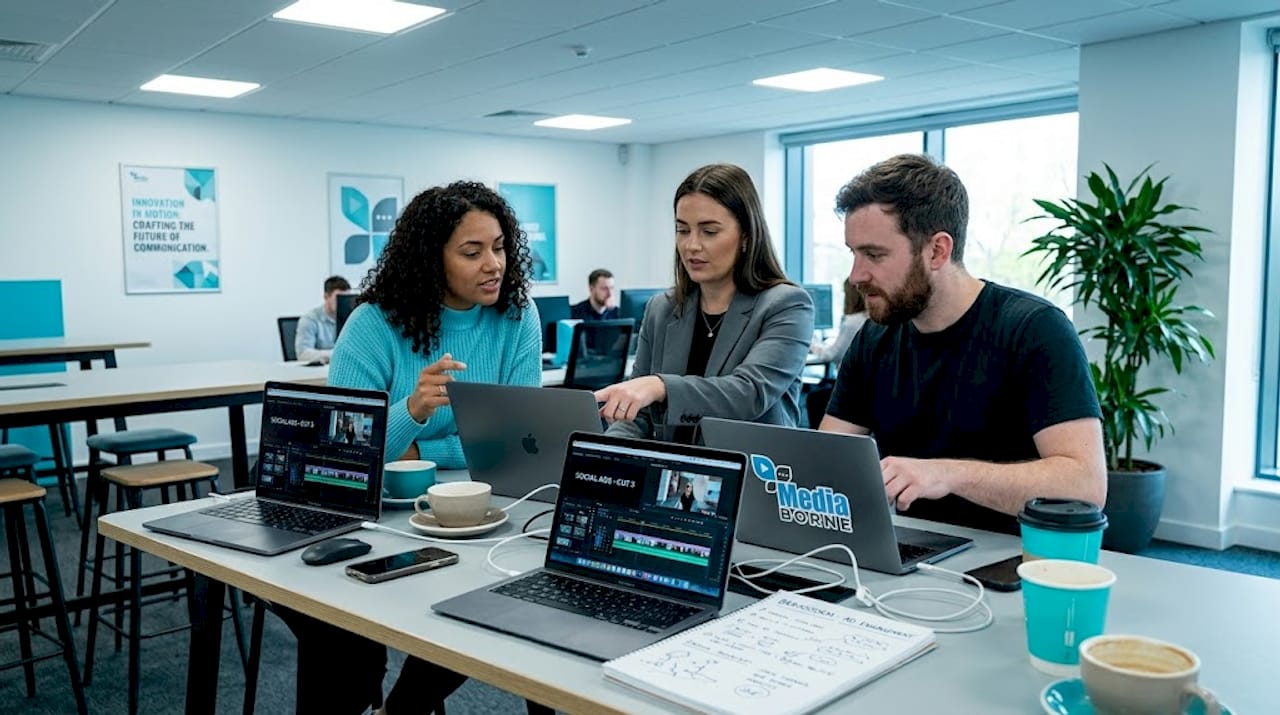
Spark Ads and whitelisting. Spark Ads allow brands to boost organic creator posts directly from the creator's account, lending credibility and authenticity that traditional ads cannot replicate. Whitelisting (giving a brand permission to run ads from a creator's handle) extends this further, combining the trust of a creator's voice with the precision of paid targeting.
| Strategy | Primary benefit | Best for |
|---|---|---|
| Affiliate UGC | Volume and authenticity at low cost | Discovery and top-of-funnel reach |
| Hybrid bidding | Balances reach with ROI efficiency | Scaling proven campaigns |
| Creative refresh (7-14 days) | Prevents ad fatigue | Sustaining campaign performance |
| Spark Ads and whitelisting | Creator credibility with paid reach | Conversion and mid-funnel trust |
A step-by-step approach to launching your first entertainment-led social commerce campaign:
- Define your entertainment angle. Identify what your product genuinely does for people and find the entertaining, relatable, or surprising version of that story.
- Recruit 10 to 20 affiliate creators. Use TikTok Shop's affiliate marketplace or a creator agency to find creators whose audiences match your target customer.
- Brief creators loosely. Give key messages and product benefits but allow creative freedom. Overly scripted UGC loses the authenticity that makes it work.
- Launch with Max Delivery bidding. Let the platform optimise for volume initially to gather performance data across your creative variants.
- Identify your top performers within 7 days. Look at view-through rate, click-through rate, and conversion rate to find which videos are genuinely resonating.
- Refresh creatives at day 10 to 14. Commission new content from your best-performing creators, iterating on the angles and formats that worked.
- Transition to Target ROI bidding. Once you have enough conversion data, switch to ROI-focused bidding to lock in efficiency.
Pro Tip: Do not wait until you have a perfect creative before launching. Release multiple variants simultaneously and let the data tell you what your audience actually responds to. The algorithm is your research department.
Explore viral video strategies and social video strategy frameworks to deepen your approach beyond the basics.
Metrics that matter: Measuring impact and ROI in entertainment-led campaigns
Virality without commercial outcomes is just entertainment. The brands that secure ongoing investment in entertainment-led social are the ones who can walk into a board meeting with hard numbers. Fortunately, the data from leading campaigns is extraordinarily compelling.
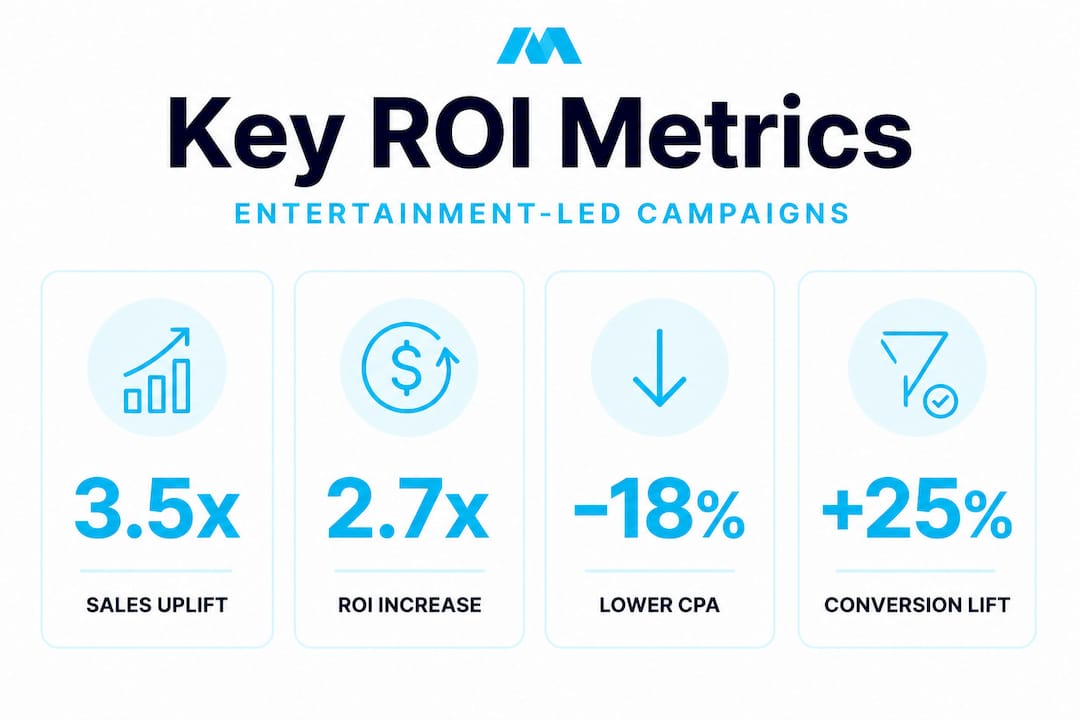
The sales results from TikTok entertainment campaigns include a 2,159% sales increase, 411% ROI uplift, and a 90% reduction in cost per order for brands using the GMV Max approach. These are not incremental improvements. They are category-defining shifts. Meanwhile, Freshly Cosmetics' affiliate-led campaign delivered a 74% improvement in conversion rate, 31% uplift in return on ad spend (ROAS), and a 38% reduction in cost per acquisition (CPA).
The KPIs (key performance indicators, the specific metrics used to measure campaign success) that matter most for entertainment-led social campaigns are:
- Conversion rate: The percentage of people who see your content or ad and complete a purchase. This is your most direct measure of commercial effectiveness.
- Cost per order (CPO): How much you spend in advertising to generate each sale. A falling CPO is the clearest sign your campaign is becoming more efficient.
- Return on ad spend (ROAS): Revenue generated for every pound spent on advertising. Target ROAS benchmarks vary by category but should improve as your creative and bidding strategy matures.
- Share of voice: How much of the conversation in your category your brand owns on social platforms. This is a longer-term brand health metric that signals competitive positioning.
- Organic mentions and saves: Unpaid engagement signals that your content is genuinely resonating and being shared beyond your paid distribution.
| Brand | Sales uplift | ROI uplift | CPA change | Conversion rate |
|---|---|---|---|---|
| e.l.f. Cosmetics (TikTok) | +2,159% | +411% | -90% CPO | Significant uplift |
| Freshly Cosmetics (TikTok Shop) | Significant | +31% ROAS | -38% CPA | +74% |
Understanding video marketing for ROI and staying across innovative media trends will help you frame these metrics in a way that resonates with finance and leadership teams.
Pro Tip: Always pair campaign-level metrics (conversion rate, CPO) with brand-level metrics (share of voice, organic mentions) when presenting to senior stakeholders. Campaign data proves efficiency. Brand metrics prove you are building something durable.
Applying the playbook: Step-by-step guide to activating entertainment-led campaigns
Knowing the strategies and metrics is only useful if your team can actually execute. Here is a practical framework for taking everything above and turning it into a live campaign.
The TikTok GMV Max mechanics confirm that the most successful campaigns combine affiliate UGC, Spark Ads, whitelisting, hybrid bidding, and a disciplined creative refresh cycle. Your playbook should mirror this structure.
Step-by-step campaign activation:
- Audit your current content. Identify what you already have, what formats are performing, and where the gaps are before spending on new production.
- Set up your TikTok Shop affiliate programme. If you have not already, this is foundational. Without it, you cannot access the affiliate UGC ecosystem that drives scalable, authentic content.
- Define your creative brief. Focus on the entertainment angle, the product benefit, and the call to action. Keep it short and leave room for creator interpretation.
- Produce three to five hero video variants in-house. These act as your control group and give creators a reference point for tone and format.
- Launch affiliate outreach to 15 to 25 creators. Prioritise creators with engaged audiences in your category over those with the highest follower counts.
- Run Spark Ads on your best-performing organic posts. Do not wait for a post to go viral. Identify early engagement signals (high save rate, strong comment sentiment) and amplify quickly.
- Review performance at day 7. Cut underperforming creatives, scale budget behind top performers, and commission new content from your best creators.
- Switch to Target ROI bidding at day 14 to 21. By this point, you should have enough conversion data for the algorithm to optimise efficiently.
- Report weekly with a dashboard. Include CPO, ROAS, conversion rate, and organic engagement in a single view that stakeholders can review quickly.
Common pitfalls to avoid:
- Waiting too long to refresh creatives. Ad fatigue sets in faster than most teams expect. Build creative refresh into your production calendar from the start.
- Over-scripting creator content. The more a video looks like an ad, the less it performs. Trust your creators.
- Ignoring attribution. Without proper tracking (UTM parameters, TikTok Pixel, and conversion API), you cannot accurately attribute sales to specific creatives or creators.
- Scaling too fast. Increasing budget dramatically before your creative and bidding strategy is proven wastes spend. Scale incrementally as performance data confirms efficiency.
For professional support with social media video production, working with a specialist partner can significantly accelerate your time to results.
Why most brands overcomplicate entertainment-led social media—and what actually works
Here is the uncomfortable truth about entertainment-led social: most brands are not failing because they lack budget or talent. They are failing because they are waiting for conditions that will never be perfect.
Teams spend months developing a single hero creative, seeking approvals through multiple layers, and planning a campaign launch that, by the time it goes live, is already behind the curve. Meanwhile, the brands winning on TikTok are launching five pieces of content a week, learning from each one, and iterating in real time.
The data from GMV Max campaigns is unambiguous: the winning formula is affiliate UGC, Spark Ads, hybrid bidding, and creative refresh every 7 to 14 days. Not a single, expensive, beautifully produced hero asset. Rhythm beats perfection every time.
This is a genuine mindset shift. Entertainment-led social rewards brands that treat content like a conversation rather than a broadcast. You are not producing a television commercial. You are participating in a living, evolving feed where the audience tells you what they want by how they engage.
Overinvestment in a single piece of content is not just a financial risk. It is a strategic one. When a brand pins its hopes on one video, it loses the agility to respond to what is actually working. The brands we see consistently winning are the ones who have built a content engine, not a content monument.
Staying informed about innovative media production trends is part of maintaining that agility. The platforms evolve, the formats shift, and the brands that adapt quickly are the ones that compound their advantage over time.
Take your consumer products to the next level with expert-led video production
Ready to put these strategies into action with expert support? Building an entertainment-led content engine requires more than a good idea. It requires production capability, platform expertise, and a strategic framework that connects creative output to commercial outcomes.
At Media Borne, we combine video production services with a deep understanding of social commerce mechanics to help consumer product brands build content that genuinely converts. Whether you need a scalable library of social selling video production assets or want to stand out with virtual tours and immersive video experiences for product showcases, we build content that earns attention and drives measurable sales. Your next campaign does not have to start from scratch. Let us help you build the entertainment engine your brand deserves.
Frequently asked questions
What makes entertainment-led content effective for consumer products?
Entertainment-led content earns genuine attention by making audiences want to watch, share, and return, which builds brand trust far more effectively than interruptive advertising. Brands like e.l.f. Cosmetics demonstrate this with 7 billion TikTok views translating directly into market leadership and revenue growth.
How do I measure campaign ROI beyond likes and views?
Focus on hard commercial metrics including conversion rate, cost per order, and ROAS attributed directly to your social campaigns. Freshly Cosmetics achieved a 74% uplift in conversion rate and a 38% reduction in CPA, which are the kinds of numbers that justify ongoing investment.
Are these social tactics only for large brands?
Affiliate UGC and rapid creative refresh are particularly accessible for challenger brands and SMEs because they rely on creator relationships rather than large production budgets. The TikTok Shop affiliate model allows brands of any size to generate high volumes of authentic content affordably.
What is the creative refresh schedule for high-performing social ads?
Rotating new creatives every 7 to 14 days is the benchmark used by leading brands to prevent ad fatigue and maintain algorithmic distribution. The GMV Max playbook specifically identifies this refresh cadence as a core driver of sustained campaign performance.
Which social platforms are best for entertainment-led consumer product campaigns?
TikTok currently leads in entertainment-driven sales impact due to its native commerce tools, affiliate ecosystem, and algorithm that actively rewards engaging content. Instagram Reels and YouTube Shorts are also highly effective, particularly for brands with existing audiences on those platforms.
Recommended
- Social video strategy: drive 105% more engagement in 2026
- Social Media Video Production UK | High-Impact Content
- Social media strategy tips to boost engagement in 2026
- Boost brand growth: media production for marketing ROI
- Social Media Advertising | Brainiac Media
- Why Social Media Advertising Boosts Business Growth - Jarrod Harman