
TL;DR:
- Media diversification involves distributing a brand's communication across multiple media channels to reduce reliance on any single platform. The PESO framework—paid, earned, shared, owned—guides the strategic integration of these media types to amplify content and foster resilience against platform shifts. Implementing true diversification requires role clarity, sequencing, and owned media as a foundational asset to ensure sustained growth and audience engagement.
Media diversification is defined as the deliberate distribution of a brand's communication across multiple media channels and types to reduce dependence on any single platform and increase overall engagement effectiveness. Rather than concentrating budget and effort on one channel, brands spread bets across channels with different risk and return profiles, continuously monitoring KPIs to protect performance. This guide explains the PESO framework (paid, earned, shared, owned), why audience fragmentation makes diversification non-negotiable in 2026, and how to build a media portfolio that compounds returns rather than simply adding noise. Whether you manage brand strategy at a consumer goods company or run campaigns for a media-led business, the principles here apply directly to your planning cycle.
What is media diversification and how does the PESO model define it?
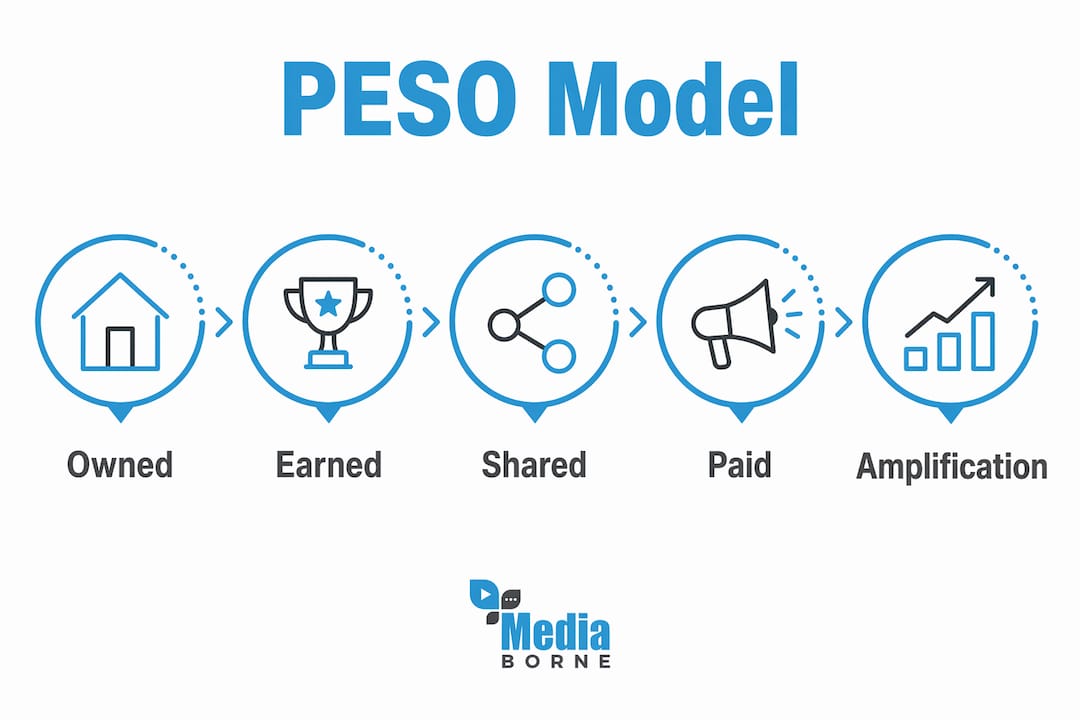
Media diversification, known in professional practice as a media portfolio strategy, is the structured allocation of brand communications across owned, earned, shared, and paid media. The PESO model, developed by Gini Dietrich and widely adopted in PR and marketing strategy, provides the clearest framework for understanding how these four types function together.

| Media type | Control level | Primary role | Key benefit |
|---|---|---|---|
| Owned | Full | Content hub and destination | Persistent, brand-controlled narrative |
| Earned | None | Third-party validation | Credibility and trust signals |
| Shared | Partial | Community engagement | Reach and social proof |
| Paid | Full (spend) | Amplification and acceleration | Scale and speed |
Owned media, your website, blog, podcast, or YouTube channel, acts as the durable foundation. It provides consistent context for both human audiences and AI discovery tools. Earned media adds third-party validation through press coverage, reviews, and organic mentions, which owned media alone cannot manufacture. Paid media buys reach and speed, accelerating what already works rather than substituting for substance.
The critical insight is sequencing. PESO compounding occurs only when each type actively feeds the others. A press mention that links to a well-structured owned media hub generates more durable value than one that links to a homepage with no content depth. Paid promotion of earned coverage performs better than cold paid creative because the credibility transfer is already built in.
Pro Tip: Do not treat PESO as four separate budgets. Treat it as one integrated system where each type amplifies the others. A single piece of owned content can generate earned coverage, shared engagement, and paid amplification simultaneously.
Why is media diversification important for brand resilience?
Platform algorithm volatility is the most immediate reason to diversify. Brands that built their entire audience on a single platform, whether Facebook organic reach in 2014 or Google Search traffic in 2024, discovered the fragility of that position when algorithms shifted. Direct audience relationships insulate brands against these changes and provide long-term business value that no platform can revoke.
Audience fragmentation compounds this risk. Consumers in 2026 do not consume media in one place or one format. They move between short-form vertical video on TikTok, long-form documentary content on YouTube, audio on Spotify, newsletters in their inbox, and live social commerce events. A brand present in only one of these environments is invisible to the majority of its potential audience for most of their media day.
The benefits of a diversified media approach are concrete:
- Risk reduction: No single algorithm change, platform outage, or policy shift can eliminate your entire reach.
- Sustained engagement: Different formats serve different stages of the buyer journey, keeping your brand present from discovery through to conversion.
- Growth resilience: Accenture's 2026 research links fragmented engagement to growth, recommending brands move beyond legacy single-channel models towards creator spaces and communities.
- Credibility compounding: Earned and owned media working together build trust that paid media alone cannot replicate.
- Revenue pathway diversification: Publishers and media brands that diversified revenue through events, licensing, and subscriptions reduced their dependency on Google traffic as search referrals declined.
The last point matters for brand strategists beyond the publishing world. When auxiliary activities such as events, memberships, or community spaces are integrated into a media strategy, they can evolve from supplementary tactics into core revenue engines. That shift requires deliberate diversification planning, not accidental expansion.
How do marketers implement a diversified media strategy?
The most useful mental model for implementation is treating channels as financial investments with varied risk, return, and timeline characteristics. Some channels, like paid social, deliver fast returns with high spend sensitivity. Others, like SEO-driven owned media or a branded podcast, require longer runways but generate compounding returns over time. A well-managed media portfolio holds both.
Here is a practical sequence for building and managing your diversification plan:
- Audit your current channel mix. Map where your budget and content effort currently sit. Identify concentration risk, the point at which more than 60% of traffic, leads, or revenue depends on a single source.
- Define role clarity for each channel. Each channel serves a unique function in discovery, conversion, or credibility transfer. Assign one primary job to each channel before adding new ones.
- Build owned media first. Your website, content hub, or video library must be strong enough to serve as the destination before you drive traffic from other sources. Owned media in the AI discovery era provides the consistent context that both search engines and AI tools rely on to surface your brand accurately.
- Layer earned media for credibility. Pursue press coverage, partnerships, and creator collaborations that link back to your owned assets. Earned media without a strong owned destination is transient value.
- Activate paid media to accelerate what works. Use paid channels to amplify content that has already demonstrated organic traction. This approach reduces wasted spend and improves ROAS because you are scaling proven signals.
- Monitor with attribution and KPIs. Track cost per click (CPC), click-through rate (CTR), return on ad spend (ROAS), and incrementality across channels. Adjust allocation quarterly based on performance data rather than annual planning cycles.
- Expand channels only when core channels are stable. Adding a new platform before your existing mix is performing consistently dilutes focus and creates measurement drift.
Pro Tip: The most common strategic error is confusing multichannel presence with true diversification. Being active on six platforms is not diversification if all six serve the same function and share the same audience. True diversification means distinct channel roles, complementary reach, and genuine risk spreading.
How does media diversification shape content strategy and audience engagement?
Diversification is not just a distribution decision. It fundamentally changes how you plan and produce content. When your media mix spans YouTube long-form, TikTok vertical video, a newsletter, and a podcast, you are not creating four separate content strategies. You are creating one narrative system where each format serves a specific audience segment or journey stage.
Content format diversification for retention and loyalty works because different formats reach people at different levels of attention and intent. A 60-second TikTok introduces your brand to someone who has never heard of you. A 20-minute YouTube documentary converts that awareness into genuine affinity. A weekly newsletter retains the audience that affinity built. Each format is doing a different job, and together they create a retention loop that no single format can achieve alone.
The table below maps common media formats against their primary engagement function and business outcome:
| Format | Primary engagement function | Business outcome |
|---|---|---|
| Short-form vertical video (TikTok, Reels) | Discovery and awareness | Audience growth |
| Long-form video (YouTube) | Education and affinity building | Brand trust and conversion |
| Podcast or audio | Habit formation and loyalty | Retention and community |
| Newsletter or email | Direct relationship and retention | Repeat purchase and advocacy |
| Live social commerce | Real-time conversion | Direct revenue |
| Blog or content hub | SEO and AI discoverability | Organic traffic and authority |
Owned media assets, particularly long-form video and written content, also serve a function that many brand strategists underestimate. They provide the durable content base that AI tools like ChatGPT, Perplexity, and Google's AI Overviews draw on when answering user queries. A brand with a well-structured content hub is more likely to be cited by AI than one whose presence is limited to social posts with no permanent URL.
Diversified media touchpoints also enable tailored messaging across audience segments. A prospective customer in the awareness stage needs different content from a loyal customer in the advocacy stage. A single-channel strategy forces you to serve both with the same message. A diversified strategy lets you meet each segment where they are, with content calibrated to their specific moment in the relationship.
Key takeaways
Effective media diversification requires owned media as the foundation, role clarity for every channel, and sequenced activation of earned and paid media to generate compounding returns.
| Point | Details |
|---|---|
| PESO as a system | Owned, earned, shared, and paid media must feed each other, not operate as separate budgets. |
| Sequencing matters | Build owned media first, then earn credibility, then use paid to accelerate proven content. |
| Role clarity over channel count | Assign one primary function to each channel before adding new platforms to the mix. |
| Audience fragmentation is the driver | Consumers move across formats and platforms daily, making single-channel strategies structurally insufficient. |
| Diversification compounds returns | Auxiliary activities like events and communities can evolve into durable revenue engines when integrated deliberately. |
The mistake I see most brands make with diversification
Most brands I work with arrive at the diversification conversation after a crisis, a Google algorithm update that halved their traffic, a TikTok account suspension, or a paid channel whose costs tripled overnight. The instinct at that point is to add channels quickly. That instinct is almost always wrong.
Adding channels without first establishing role clarity and a strong owned media foundation creates the illusion of diversification while actually spreading resources too thin to perform well anywhere. I have seen brands active on eight platforms with no clear content hub, no email list, and no owned audience to show for it. That is not a portfolio. That is scatter.
The brands that handle disruption well are the ones that treated owned media as a non-negotiable investment before they needed it. Their website content is thorough enough to rank in AI-generated answers. Their email list is large enough to sustain a campaign without paid support. Their YouTube library is deep enough to keep generating views years after publication. These are not glamorous investments, but they are the ones that hold value when everything else shifts.
My honest view is that the future of media diversification sits at the intersection of entertainment and owned audience building. Brands that produce content people genuinely want to watch, read, or listen to, and that own the relationship with that audience directly, will be structurally more resilient than those who rent attention from platforms indefinitely. The media production and marketing ROI case for investing in original content formats has never been stronger.
— Stephen
How Media Borne can build your owned media foundation
Media Borne specialises in producing original video content and entertainment formats that function as owned media assets at the core of a diversified brand strategy. Rather than producing one-off campaign videos, Media Borne builds content systems: series, formats, and social-native productions designed to generate discovery, build community, and convert attention into commercial outcomes across TikTok, YouTube, and live social platforms. If your brand needs a stronger owned media foundation to anchor your PESO strategy, Media Borne's professional video production services are built precisely for that purpose. Explore how original content can become your most durable media asset.
FAQ
What is media diversification in simple terms?
Media diversification is the practice of spreading a brand's communication across multiple channels and media types rather than relying on one platform. It reduces risk and increases the chances of reaching audiences wherever they consume content.
What is the difference between multichannel marketing and media diversification?
Multichannel marketing means being present on multiple platforms. Media diversification requires each channel to serve a distinct role, such as discovery, credibility, or conversion, with genuine risk spreading across formats. Presence without role clarity is not true diversification.
What is the PESO model and how does it relate to media diversification?
The PESO model organises media into paid, earned, shared, and owned types. It is the most widely used framework for structuring a media diversification strategy, ensuring each media type serves a complementary function rather than duplicating effort.
Why is owned media the starting point for diversification?
Owned media provides the durable content base that all other media types point back to. Without a strong owned foundation, earned coverage and paid traffic have nowhere to land that builds long-term value. In the AI discovery era, owned content also determines how accurately AI tools represent your brand.
How do you measure the success of a diversified media strategy?
Track CPC, CTR, ROAS, and incrementality across each channel individually, then assess the combined effect on pipeline and revenue. Quarterly reallocation based on performance data, rather than fixed annual budgets, keeps the portfolio responsive to what is actually working.