
TL;DR:
- Branded entertainment embeds a brand’s identity within original content audiences choose to watch, driving measurable brand lift. Proper planning involves clear audience positioning, measurable objectives, creative briefs, and distribution strategies before production begins. Strategic governance and iterative testing are vital to maintaining consistency and avoiding costly pitfalls in long-term branded series.
Branded entertainment production is the practice of embedding a brand's identity, values, and message within original content that audiences actively choose to watch. Unlike a 30-second pre-roll, it competes for attention on its own merit. The step by step branded entertainment production process spans strategic planning, creative briefing, episodic filming, and structured distribution. Get any phase wrong and you waste both budget and audience goodwill. Get it right and you build something that drives measurable brand lift while generating the kind of recall that paid media alone cannot buy.
What prerequisites and planning essentials are needed before production begins?
The single most common reason branded entertainment fails is that production starts before strategy is settled. Before a camera rolls, you need four things locked: audience positioning, a measurable objective, a creative brief, and a budget split that respects distribution.

Audience and positioning analysis means going beyond demographics. A strong brief must specify target audience beliefs before and after, what the brand needs to be credible in their eyes, and what attitude or action shift the content should produce. This forces clarity that generic persona documents never achieve.
Measurement objectives must go beyond views. Define whether you are measuring brand recall, sentiment shift, subscribe-and-return rate, or direct conversion. Each objective shapes different production decisions, from episode length to call-to-action placement.
Budget allocation is where most teams underinvest in distribution. Content without amplification has no realistic path to audience. A working rule is to treat distribution spend as at minimum equal to production spend, not an afterthought once the edit is delivered.
- Map your audience's existing beliefs and the shift you want to create
- Write measurable objectives tied to brand perception, not just reach
- Build a content calendar that sequences episodes before production begins
- Allocate budget with distribution as a first-class line item, not a remainder
Pro Tip: Before briefing any creative team, write a single sentence that completes this prompt: "After watching this series, our audience will believe X, which they did not believe before." If you cannot write that sentence, you are not ready to brief.
How to develop the creative concept and brief for entertainment-first integration
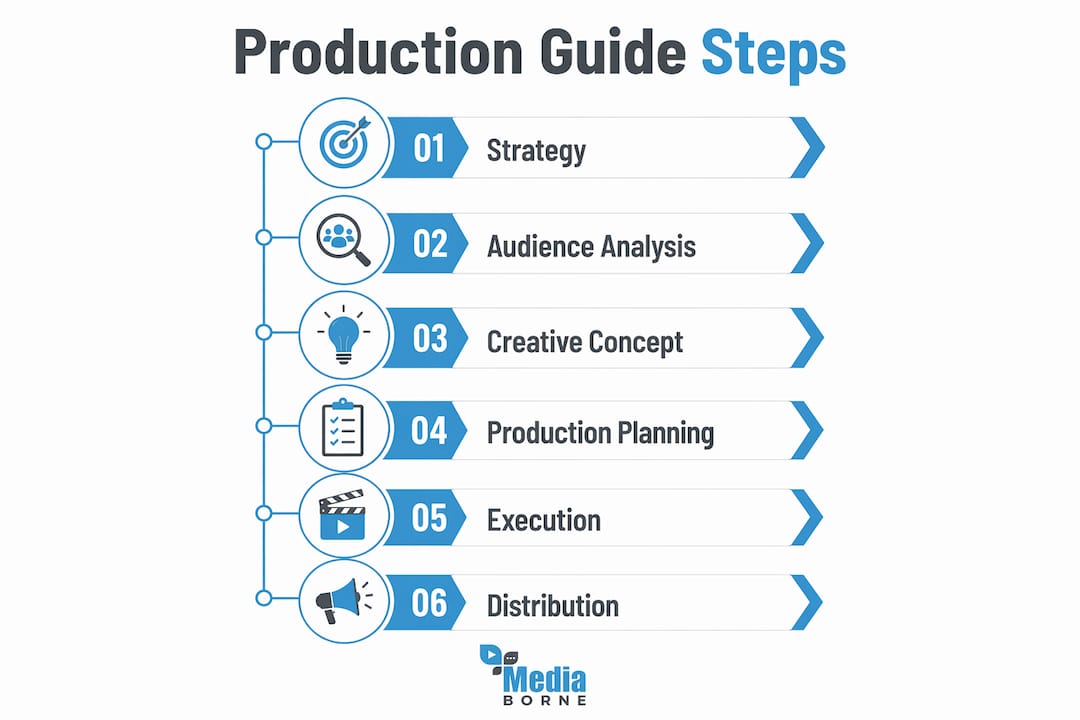
The creative brief is the most consequential document in branded entertainment production. Most briefs read like product spec sheets. The best ones read like a pitch for a show that happens to have a brand partner.
Branded entertainment works best when the brand is part of the story rather than narrating stories about itself. This distinction is not semantic. It determines whether audiences watch voluntarily or click away. Your brief must establish a narrative premise, an emotional territory, and a clear reason for the brand to exist within that world.
Follow this sequence when building your entertainment-first brief:
- Write the narrative premise first. Describe the show or series concept in two sentences without mentioning the brand. If the concept only works with the brand present, it is an advertisement, not entertainment.
- Define the emotional territory. Specify the feeling the audience should carry away: curiosity, aspiration, belonging, or humour. Tone references from existing shows or creators are more useful than adjectives.
- Set integration parameters. Specify where and how the brand appears. Is it a presenting sponsor? A product used naturally within the story? A character's employer? Vague briefs produce awkward integrations.
- Build in share triggers. Share triggers embedded in narratives drive organic engagement more reliably than product placement. These are moments of surprise, strong opinion, or emotional resonance that audiences want to pass on.
- Include FTC compliance requirements. Disclosure language, placement, and format must be specified in the brief, not added as a post-production footnote.
- Bring creators into development early. Flexible branded structures allow multiple creator collaborations and reduce the risk of over-reliance on a single talent relationship.
Pro Tip: Send your brief to someone outside your team and ask them to describe the show back to you. If they lead with the brand rather than the story, rewrite the premise until the story comes first.
What are the key steps in executing production efficiently?
Production execution is where strategy either holds or collapses. The most expensive mistake in episodic branded content is treating each episode as a separate shoot. Planning a full season as a single production block with modular shot lists saves weeks in post-production and significantly reduces per-episode cost.
Batched shoot blocks of two to three intensive days for all episodes reduce costs, increase visual consistency, and allow the production team to optimise lighting, location, and talent scheduling across the whole series rather than rebuilding it each time.
Batch vs. individual episode shoots
| Approach | Cost impact | Consistency | Flexibility |
|---|---|---|---|
| Individual episode shoots | High per-episode cost | Variable tone and look | High creative flexibility |
| Batched production block | Lower per-episode cost | Consistent visual language | Requires upfront planning |
| Hybrid (batch core, add inserts) | Moderate cost | High consistency | Moderate flexibility |
The hybrid model suits most branded series. Batch the interview segments, presenter pieces, and brand integration moments. Leave room for topical inserts or reactive content that keeps the series feeling current.
Key production practices that protect quality and budget:
- Use modular shot lists that generate multiple assets from a single setup: a long-form episode, a short-form clip, a thumbnail, and a social teaser
- Assign a single editorial lead who owns consistency across all episodes, not just individual directors
- Manage creator and talent briefings in writing, with approved talking points and integration moments specified before the shoot day
- Build quality control checkpoints at rough cut, fine cut, and final delivery stages rather than reviewing everything at the end
How to plan a distribution strategy that maximises audience reach
Effective branded entertainment treats launch as a system, not a one-off event. Distribution must be designed before production wraps, because the assets you need for a sequenced release, such as teasers, clips, and episode trailers, must be captured during the shoot.
A structured distribution plan for an episodic series follows this sequence:
- Release a teaser before the first episode. A 60 to 90 second clip that creates a narrative gap, something unresolved that the series will answer. This is not a highlight reel. It is a promise.
- Sequence paid amplification to mirror the subscriber journey. Paid boosts should follow episode release schedules, targeting cold audiences with episode one and retargeting viewers with subsequent episodes. Spending paid budget on episode three before someone has seen episode one is wasted reach.
- Build playlists with discoverable titles on YouTube. Episode sequencing and curated playlists increase subscriber retention and brand lift more than isolated videos. Titles should answer search queries, not just describe episode content.
- Repurpose across channels with platform-native formats. A 20-minute YouTube episode becomes a 60-second TikTok, a 90-second Instagram Reel, and a three-minute LinkedIn cut. Each version should feel native, not cropped.
- Track subscribe-and-return behaviour. The metric that separates branded entertainment from branded content is whether audiences come back. Monitor return viewer rate per episode as your primary engagement signal.
Cross-channel repurposing is not about volume. It is about placing the right length and format in front of the right audience at the right stage of their relationship with the series. For deeper thinking on short-form video strategy, the principles of platform-native editing apply directly to repurposed series content.
What are the most common pitfalls in branded entertainment production?
The pitfalls that derail branded entertainment are rarely creative failures. They are governance failures.
Most branded content programmes drift from their original positioning without editorial leadership and strategic governance. The first episode reflects the brief. By episode six, the brand's point of view has softened, the tone has shifted, and the series looks like a different show. Preventing this requires a living point of view document, regular editorial reviews, and a senior stakeholder with the authority to protect the creative direction.
- Under-planning distribution is the most expensive mistake. Producing a six-episode series and then deciding how to release it is like printing a book and then looking for a publisher.
- Fragmented production schedules inflate costs and destroy visual consistency. If episodes look like they were made by different teams, audiences notice.
- Over-specifying brand presence in the brief produces content that feels like advertising. Audiences disengage within seconds when they sense they are being sold to rather than entertained.
- Ignoring iterative learning wastes budget. Smaller, faster production cycles allow you to test formats, measure response, and adapt before committing to a full series budget.
"The brands that win in entertainment are not the ones with the biggest budgets. They are the ones with the clearest editorial point of view and the discipline to protect it across every episode."
Managing stakeholder expectations is a production skill as much as a creative one. Brief internal approvers on the entertainment-first approach before production begins. If they expect a product video and receive a narrative series, the approval process will damage the work.
Key takeaways
Successful branded entertainment production requires a clear brief, batched production discipline, and a distribution system built before the first episode launches.
| Point | Details |
|---|---|
| Brief before you produce | Specify audience belief shifts and narrative premise before any creative development begins. |
| Batch your production | Shoot full series in blocks of two to three days to reduce cost and maintain visual consistency. |
| Distribution is not optional | Allocate distribution budget equal to production spend and plan release sequencing upfront. |
| Protect editorial leadership | Assign a senior editorial lead to prevent brand positioning drift across episodes. |
| Build share triggers in | Design moments of surprise or emotional resonance into scripts to drive organic reach. |
Why entertainment-first thinking changes everything
I have reviewed briefs from brands across retail, finance, and consumer goods, and the pattern is almost always the same. The brief starts with the product. The product becomes the protagonist. The audience becomes the target. And then the team wonders why the content does not perform.
The shift that changes everything is treating the brand as a supporting character in a story the audience actually wants. That sounds obvious until you are in a room with a marketing director who wants their logo in the first five seconds. The discipline required to hold the entertainment-first position under commercial pressure is real, and it is the difference between content that builds audiences and content that burns budget.
What I have found works in practice is assigning editorial ownership to someone who is not the brand manager. The brand manager's job is to protect the brand. The editorial lead's job is to protect the story. When those are the same person, the story always loses. When they are separate, with clear decision rights, the work gets better and the brand benefits more.
The other lesson I keep returning to is that iterative production is not a compromise. It is a strategy. Brands that test a pilot episode, measure the response, and adapt before committing to a full series consistently outperform those that launch with a polished ten-episode run and no audience data. Start smaller than feels comfortable. Learn faster than feels possible.
— Stephen
How Media Borne supports your branded entertainment production
Media Borne builds branded entertainment from brief to distribution, specialising in episodic formats and entertainment-first content that earns attention rather than buying it. Whether you are producing a YouTube series, a TikTok format, or a live social selling show, the team brings production discipline and strategic clarity to every phase of the process. From professional video production through to distribution planning, Media Borne works with brands that want to become part of culture rather than interrupt it. If you are ready to move from one-off content to a repeatable entertainment system, get in touch to discuss your next production.
FAQ
What is branded entertainment production?
Branded entertainment production is the process of creating original content, such as shows, series, or formats, where a brand is embedded naturally within the story rather than presented as an advertisement. The content must stand on its own as entertainment for audiences to engage with it voluntarily.
How many episodes should a branded series have?
Experts recommend planning a series as a single production block covering six to twelve episodes mapped at once. This approach reduces per-episode cost and maintains visual and editorial consistency across the series.
How much should I budget for distribution vs. production?
Distribution budget should be treated as at minimum equal to production spend. Content without a structured amplification plan has no realistic path to audience, regardless of production quality.
When should creators be brought into the production process?
Creators should be integrated during the development phase, before the brief is finalised. Early involvement produces more authentic integration and reduces the risk of talent dependency on a single creator relationship.
How do I prevent brand positioning drift across a long series?
Assign a dedicated editorial lead with a living point of view document and schedule regular editorial reviews throughout production. Senior stakeholder protection of the creative direction is the most reliable safeguard against drift.